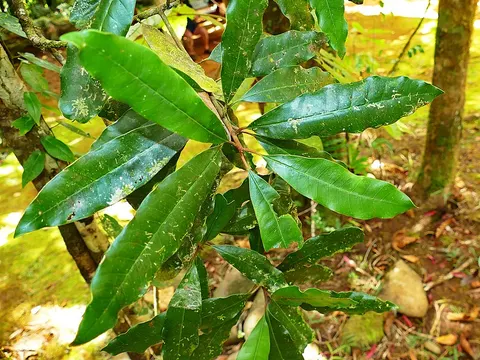
Plant, herb
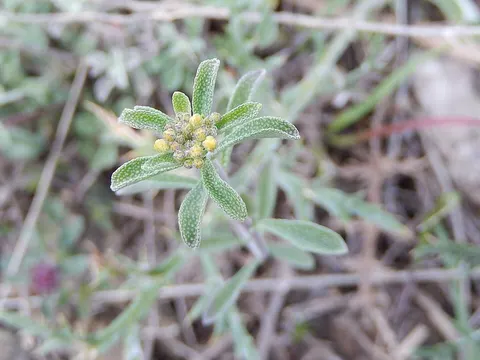
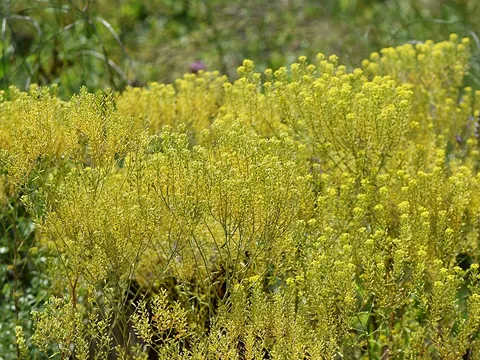
Berkheya coddii
Berkheya coddii
A South African daisy-family plant that hyperaccumulates nickel and, unlike most hyperaccumulators, produces a lot of biomass. For this reason it was proposed early on for phytomining.
How it works
- Mechanisms
- hyperaccumulationphytoextraction
- Native range
- Ultramafic soils of South Africa
Contaminants
| Contaminant | Evidence | What was shown |
|---|---|---|
| Nickel | field | In outdoor plots, with moderate fertilisation, a dry biomass of 22 t/ha was reached (Robinson et al. 1997). In leaves nickel can reach 7.6% of dry mass (review by Mesjasz-Przybyłowicz and Przybyłowicz 2020). |
| Cobalt | greenhouse | On artificial substrates it readily takes up cobalt (bioaccumulation coefficient 50 at 1,000 µg/g Co), but Co is phytotoxic above 15–20 µg/g in the substrate and, at equal concentration, inhibits nickel uptake (Keeling et al. 2003). |
Limits
A subtropical species tied to serpentine soils. In mixed Ni-Co substrates the two metals compete and extraction of both falls (Keeling et al. 2003). Cropping data on industrially contaminated soils do not appear in the sources consulted.
Sources
- Robinson et al., J. Geochem. Explor. 60:115, 1997
- Keeling et al., Int. J. Phytoremediation 5:235, 2003
- Mesjasz-Przybyłowicz and Przybyłowicz, Metallomics 12:1018, 2020
Draft compiled from public sources, not yet reviewed.
Other species for the same contaminants
Species that the literature reports acting on at least one of this one's contaminants, the closest first.