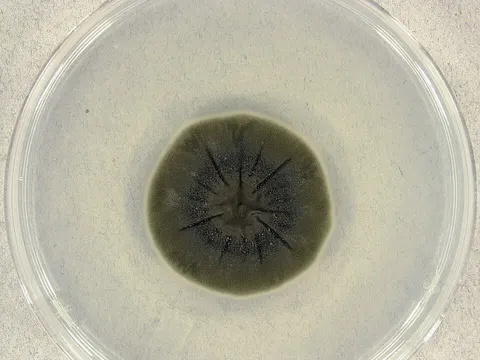
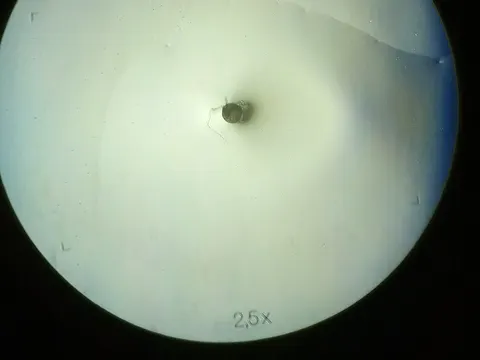
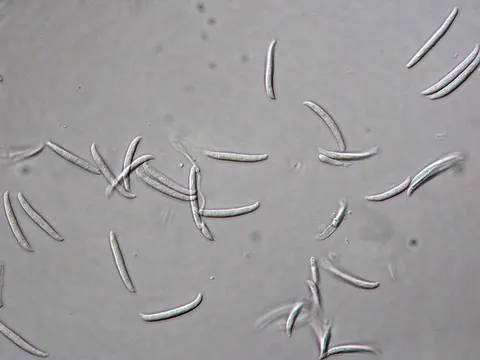
Fungus, white rot
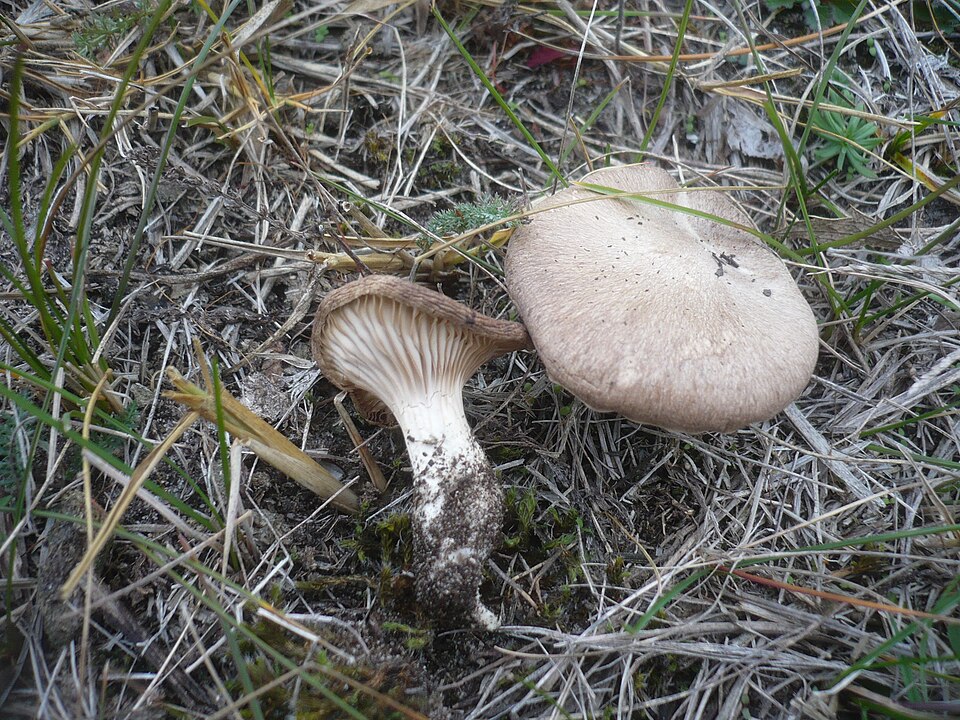
Pleurotus eryngii
King oyster mushroom
The species in which versatile peroxidase was described, an enzyme combining the substrate interaction sites of manganese peroxidase and lignin peroxidase that directly oxidises substituted phenols, dyes and veratryl alcohol. Remediation data are laboratory-scale.
How it works
- Mechanisms
- mycodegradation
- Enzymes
- versatile peroxidase, manganese peroxidase, laccase
Contaminants
| Contaminant | Evidence | What was shown |
|---|---|---|
| Synthetic dyes | laboratory | P. eryngii peroxidase isoenzymes decolorise industrial azo and phthalocyanine dyes in the absence of Mn2+ (apparent Km 4-16 µM, specific activity 3.2-10.9 U/mg, figures covering the B. adusta and P. eryngii enzymes); Phanerochaete chrysosporium MnP oxidises them little or not at all.
|
| Polycyclic aromatic hydrocarbons | laboratory | Soils spiked with fluoranthene and nickel: 86-92% of fluoranthene disappeared in inoculated soils against 71-82% in non-inoculated ones. In liquid culture strain F032 removed 59% (static) and 73% (agitated) of benzo[a]pyrene in 20 days, with benzo[a]pyrene-3,6-quinone among the products.
|
| Nickel | laboratory | In the same co-contaminated soils the fungus took up nickel (4.88-39.53 mg/kg); nickel reduced fungal growth and fluoranthene dissipation. |
Limits
The gain over non-inoculated soil is modest (about 10-15 percentage points for fluoranthene) and concerns freshly spiked contaminants, which are more available than aged ones. No field trial was found. The fungus takes up nickel: fruiting bodies grown on contaminated matrices should not be eaten.
Sources
- Camarero et al. (1999) J Biol Chem 274:10324-10330, 1999
- Heinfling et al. (1998) Appl Environ Microbiol 64:2788-2793, 1998
- Tang et al. (2016) J Basic Microbiol 56:1194-1202, 2016
- Hadibarata et al. (2022) Chemosphere 307:136014, 2022
Draft compiled from public sources, not yet reviewed.
Other species for the same contaminants
Species that the literature reports acting on at least one of this one's contaminants, the closest first.