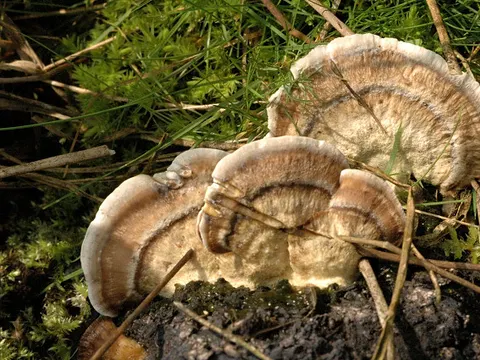
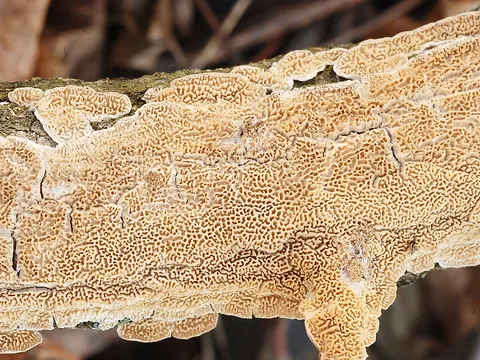
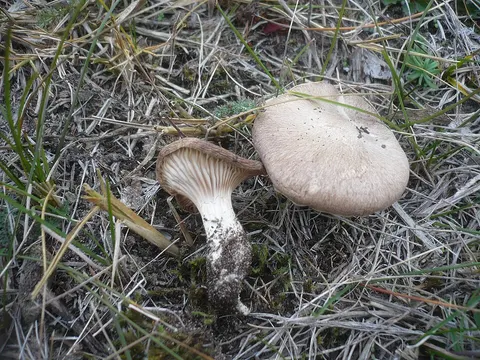
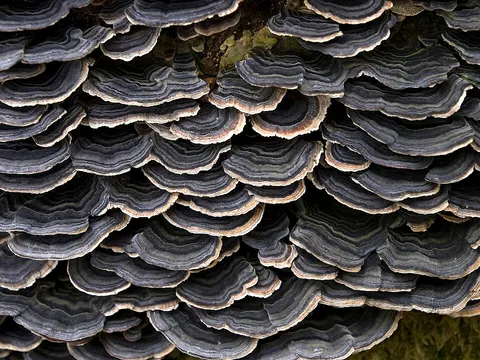
Fungus, white rot
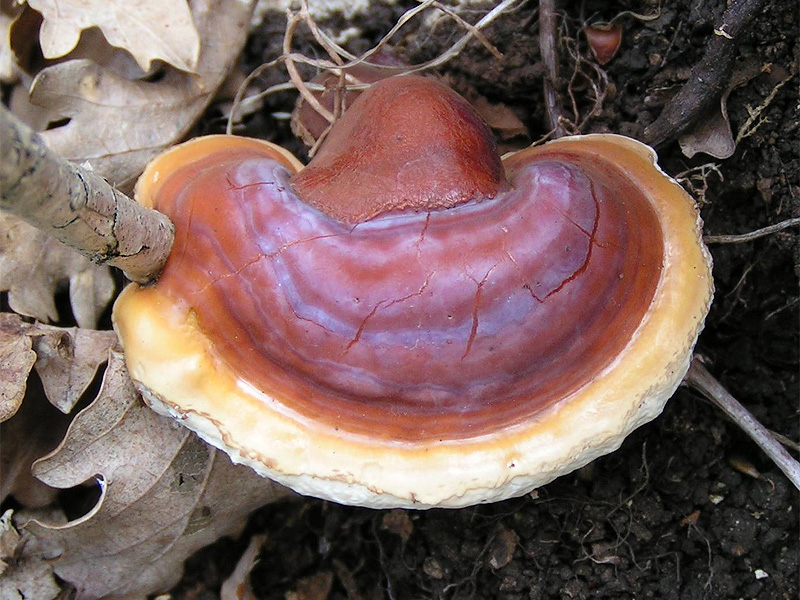
Ganoderma lucidum
Reishi, lingzhi
A white-rot fungus known as a medicinal mushroom. Its laccase tolerates mixtures of metal ions and decolorises reactive dyes; the mycelium degrades carbamazepine, a highly persistent drug.
How it works
- Mechanisms
- mycodegradation
- Enzymes
- laccase
Contaminants
| Contaminant | Evidence | What was shown |
|---|---|---|
| Synthetic dyes | laboratory | Crude laccase in vitro, dyes at 50 mg/L: with 1 mM Cu2+, 94% of Remazol Black B and 35.5% of Remazol Brilliant Blue R were decolorised in 1 hour; Fe2+ inhibits strongly. A simulated effluent needs a redox mediator: syringaldehyde (natural) was 5.6 times faster than HBT. Purified laccase LAC-4 decolorised in 24 hours from 37% (indigo carmine) to over 99% (bromophenol blue) of dyes at 800 mg/L.
|
| Pharmaceutical residues | laboratory | Liquid culture, 10 mg/L, 7 days: ibuprofen extensively degraded and carbamazepine about 47%; clofibric acid was not degraded. |
| Polycyclic aromatic hydrocarbons | laboratory | Isolated laccase, in vitro assay on 16 PAHs with a mediator: anthracene and benzo[a]pyrene fully degraded, fluorene 98.6%, acenaphthene 95.4%, acenaphthylene 90.1%, benzo[a]anthracene 85.3%; anthracene was fully degraded even without mediator. |
Limits
These are data on free enzyme in solution or liquid culture: no soil or field trial was found. Effluent decolorisation needs a mediator and is slowed by metal mixtures. The free enzyme works; immobilised LAC-4 did not show the same capacity over repeated batches.
Sources
- Murugesan et al. (2009) J Hazard Mater 168:523-529, 2009
- Deng et al. (2024) Ecotoxicol Environ Saf 279:116450, 2024
- Marco-Urrea et al. (2009) Chemosphere 74:765-772, 2009
- Punnapayak et al. (2009) Afr J Biotechnol 8:5897-5900, 2009
Draft compiled from public sources, not yet reviewed.
Other species for the same contaminants
Species that the literature reports acting on at least one of this one's contaminants, the closest first.