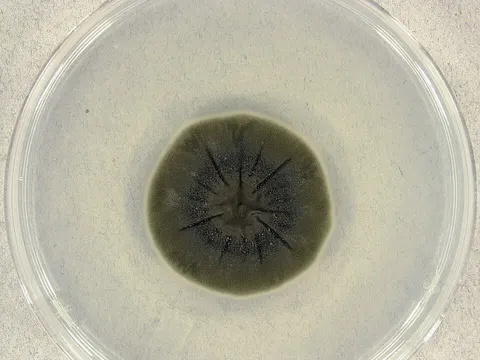
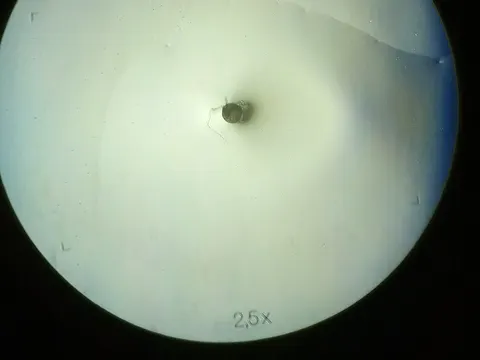
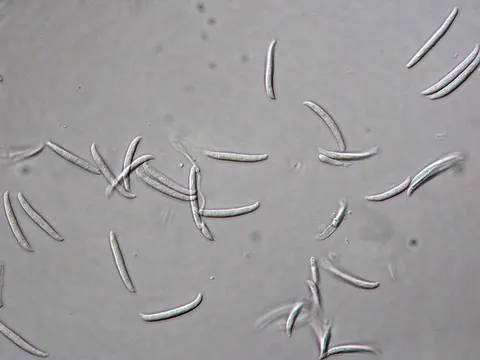
Fungus, white rot
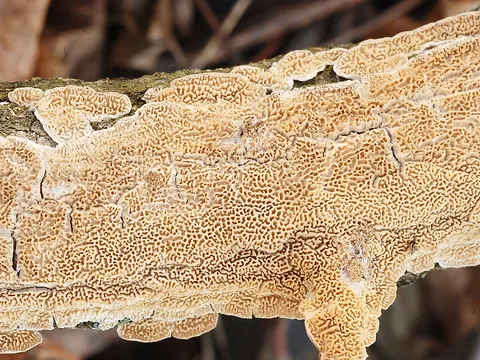
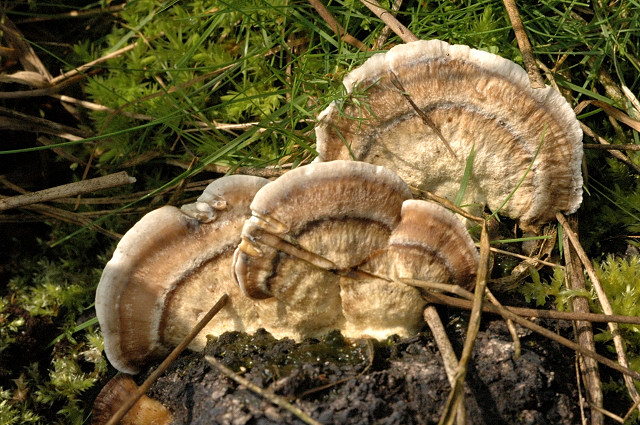
Bjerkandera adusta
Smoky bracket
A white-rot fungus whose peroxidases oxidise aromatic compounds and dyes even without manganese. A Dutch isolate of the genus, Bjerkandera sp. BOS55, was the best degrader of anthracene and benzo[a]pyrene in a classic screening.
How it works
- Mechanisms
- mycodegradation
- Enzymes
- lignin peroxidase, manganese peroxidase, versatile peroxidase
Contaminants
| Contaminant | Evidence | What was shown |
|---|---|---|
| Polycyclic aromatic hydrocarbons | laboratory | Liquid culture, 10 mg/L, 28 days: Bjerkandera sp. BOS55 removed 99.2% of anthracene and 83.1% of benzo[a]pyrene; B. adusta CBS 595.78 was among the collection strains tested in parallel. Anthracene is converted to anthraquinone, a dead-end product for Bjerkandera. |
| Synthetic dyes | laboratory | B. adusta MnP isoenzymes decolorise industrial azo and phthalocyanine dyes without Mn2+ (apparent Km 4-16 µM, 3.2-10.9 U/mg); Mn2+ in fact inhibits the reaction, non-competitively in the case of Reactive Black 5. The fungus' LiP is weakly active alone, but its activity rises 8- to 100-fold with veratryl alcohol. |
| Hexachlorocyclohexane (lindane) | laboratory | Degradation of hexachlorocyclohexane present in soil, in a slurry batch bioreactor. Only the title and bibliographic record of this paper could be consulted: per-isomer percentages are not given here. |
Limits
Data come from liquid culture or bioreactors; no field trial was found. Anthraquinone accumulation shows that loss of the parent compound is not mineralisation. The highest PAH figures belong to strain BOS55, identified only to genus.
Sources
- Field et al. (1992) Appl Environ Microbiol 58:2219-2226, 1992
- Heinfling et al. (1998) Appl Environ Microbiol 64:2788-2793, 1998
- Quintero et al. (2007) Int Biodeterior Biodegradation 60:319-326, 2007
Draft compiled from public sources, not yet reviewed.
Other species for the same contaminants
Species that the literature reports acting on at least one of this one's contaminants, the closest first.