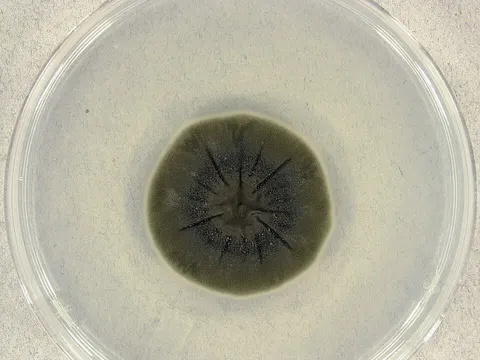
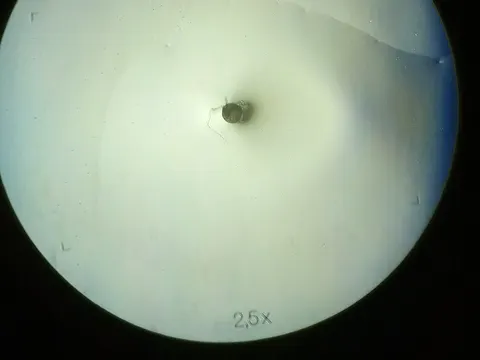
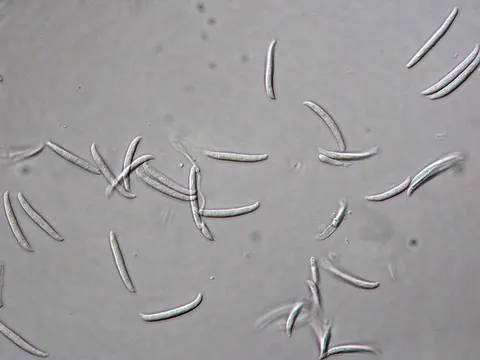
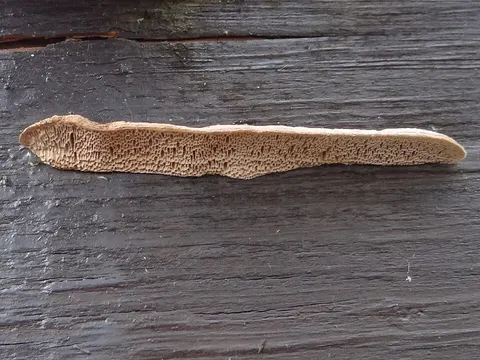
Fungus, white rot
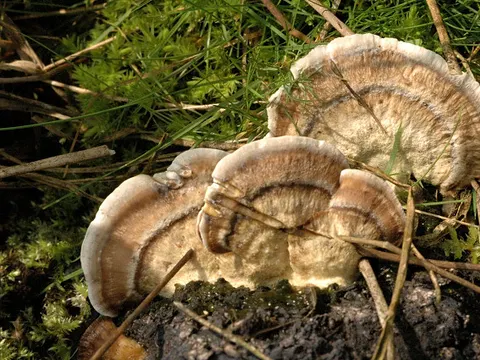
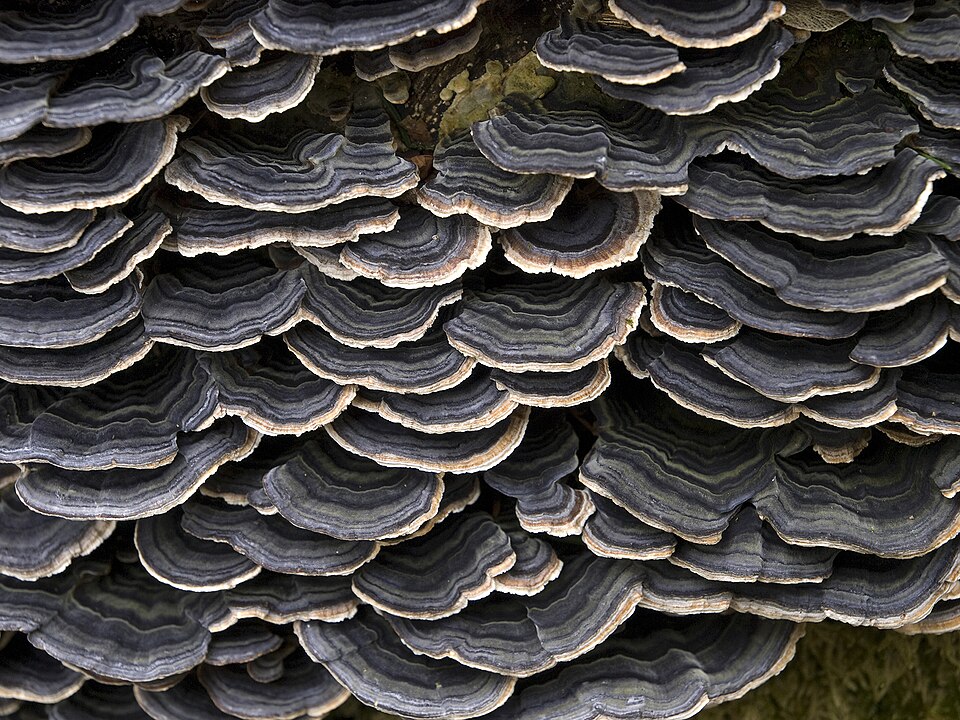
Trametes versicolor
Turkey tail
A white-rot fungus widely studied as a laccase producer. It degrades chlorophenols in soil, with a field biopile trial lasting two and a half years, and in bioreactors removes pharmaceuticals from real, non-sterile urban wastewater. For several compounds the first attack is not extracellular but depends on cytochrome P450.
How it works
- Mechanisms
- mycodegradation
- Enzymes
- laccase, manganese peroxidase, cytochrome p450
Contaminants
| Contaminant | Evidence | What was shown |
|---|---|---|
| Phenols and chlorophenols | field | New Zealand, aged soil from a former timber treatment site, in engineered soil cells (biopiles) set up in January 2000 and monitored for 2.5 years: pentachlorophenol fell from 800-1000 mg/kg to 4 mg/kg (range 0-9.4) following first-order kinetics; no effect of inoculum dose, reproducible results. In the laboratory, on field soil at 1043 mg/kg, maximum removal was 70% in 7 weeks, with minimal pentachloroanisole formation.
|
| Pharmaceutical residues | laboratory | Liquid culture, 10 mg/L, 7 days: ibuprofen almost fully degraded, clofibric acid about 91%, carbamazepine about 58%; cytochrome P450 inhibitors block the first step for clofibric acid and carbamazepine. In a fluidised-bed bioreactor fed real non-sterile urban wastewater at its original concentrations (ng-µg/L): complete removal of 7 of the 10 pharmaceuticals detected, partial removal of 2, and lower Microtox toxicity.
|
| Chlorinated solvents (TCE, PCE, chloroform) | laboratory | Trichloroethylene at 2-20 mg/L in culture: 53% of the chloride expected from complete degradation was released; main products 2,2,2-trichloroethanol and CO2 (traced with 13C-TCE), with chloral as intermediate. The pathway depends on cytochrome P450 and resembles the mammalian one, not the bacterial one. |
| Polycyclic aromatic hydrocarbons | laboratory | In liquid culture (10 mg/L, 28 days) Trametes strains removed anthracene without accumulating anthraquinone, which is a dead-end product for Bjerkandera and Phanerochaete. |
Limits
Wastewater treatment needed continuous glucose and ammonium tartrate feeding and pH held at 4.5; one pharmaceutical increased in concentration during treatment. In soil the outcome depends on inoculum age, growth substrate (poplar sawdust works better than pine or fir) and co-substrate, and PCP removal is not simply correlated with extracellular enzyme activity (Ford et al. 2007). The field biopile took years.
Sources
- Walter et al. (2005) Int Biodeterior Biodegradation 56:51-57, 2005
- Ford et al. (2007) J Environ Qual (PubMed record), pubmed.ncbi.nlm.nih.gov, 2007
- Marco-Urrea et al. (2009) Chemosphere 74:765-772, 2009
- Cruz-Morató et al. (2013) Water Res 47:5200-5210, 2013
- Marco-Urrea et al. (2008) Chemosphere 70:404-410, 2008
- Field et al. (1992) Appl Environ Microbiol 58:2219-2226, 1992
Draft compiled from public sources, not yet reviewed.
Other species for the same contaminants
Species that the literature reports acting on at least one of this one's contaminants, the closest first.