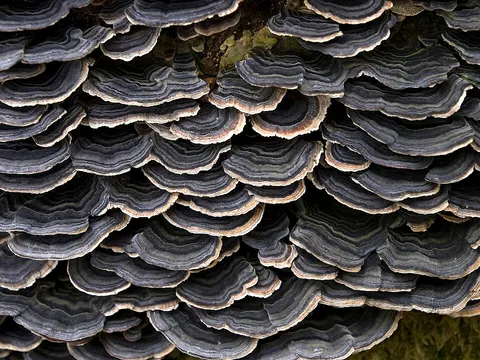
Fungus, brown rot
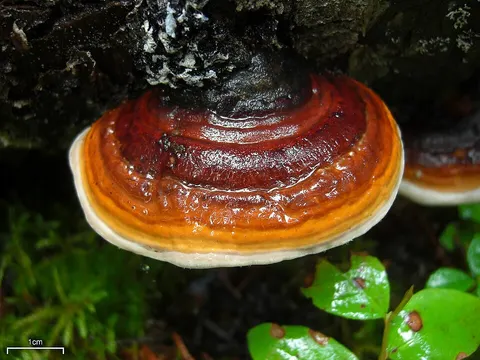
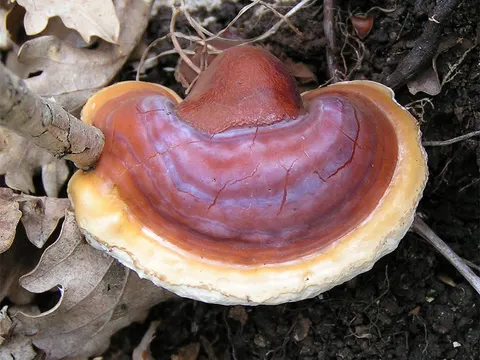
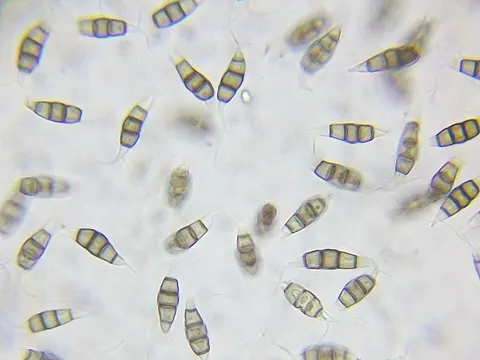
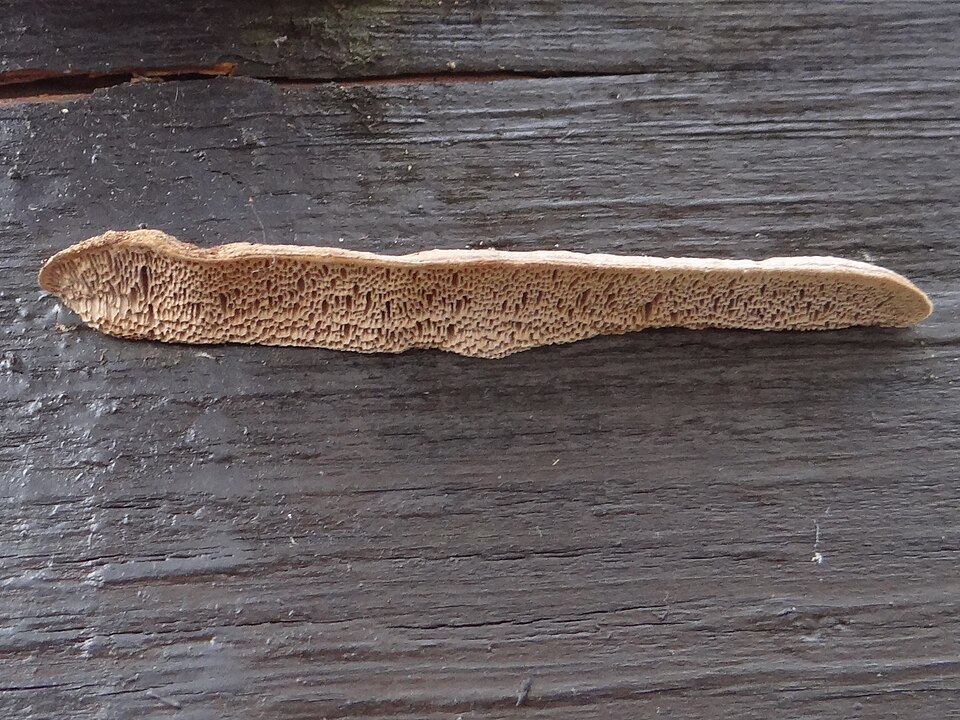
Gloeophyllum trabeum
A brown-rot fungus and the model for a mechanism unlike that of white rots: not ligninolytic peroxidases but extracellular Fenton chemistry. The fungus secretes quinones (2,5-dimethoxy-1,4-benzoquinone) and reduces them to hydroquinones, which reduce Fe3+ and produce H2O2, generating hydroxyl radicals that attack many organic compounds.
How it works
- Mechanisms
- mycodegradation
Contaminants
| Contaminant | Evidence | What was shown |
|---|---|---|
| DDT and breakdown products | laboratory | Among 12 brown-rot species tested in potato dextrose broth, G. trabeum, Fomitopsis pinicola and Daedalea dickinsii showed a high ability to degrade DDT. With G. trabeum the products are DDD, DDE and 4,4-dichlorobenzophenone (DBP); without FeSO4 no DBP forms, and a chemical Fenton reaction under similar conditions gives only DBP: the pathway is iron-dependent. |
| Plastics and microplastics | laboratory | The fungus depolymerises polyethylene glycol, a recalcitrant synthetic polymer, by hydrogen abstraction: the reaction requires 2,5-dimethoxy-1,4-benzoquinone and Fe3+ and is completely inhibited by catalase. It concerns a water-soluble polyether, not solid plastics.
|
| Pharmaceutical residues | laboratory | Data for a related species, Gloeophyllum striatum: in liquid medium it produced 27.3%, 18.5% and 6.7% 14CO2 in 8 weeks from the veterinary fluoroquinolone enrofloxacin labelled at three different positions; the hydroxylated metabolites partly match those obtained with Fenton's reagent. |
Limits
Liquid cultures only. Hydroxyl radicals are unselective: in soil they react with organic matter before the pollutant, and the mechanism needs available iron. DDT is converted to DDD, DDE and DBP, which remain chlorinated compounds. No soil or field trial was found.
Sources
- Kerem, Jensen & Hammel (1999) FEBS Lett 446:49-54, 1999
- Jensen et al. (2001) Appl Environ Microbiol 67:2705-2711, 2001
- Purnomo, Kamei & Kondo (2008) J Biosci Bioeng 105:614-621, 2008
- Wetzstein, Schmeer & Karl (1997) Appl Environ Microbiol 63:4272-4281, 1997
Draft compiled from public sources, not yet reviewed.
Other species for the same contaminants
Species that the literature reports acting on at least one of this one's contaminants, the closest first.