Plant, crop
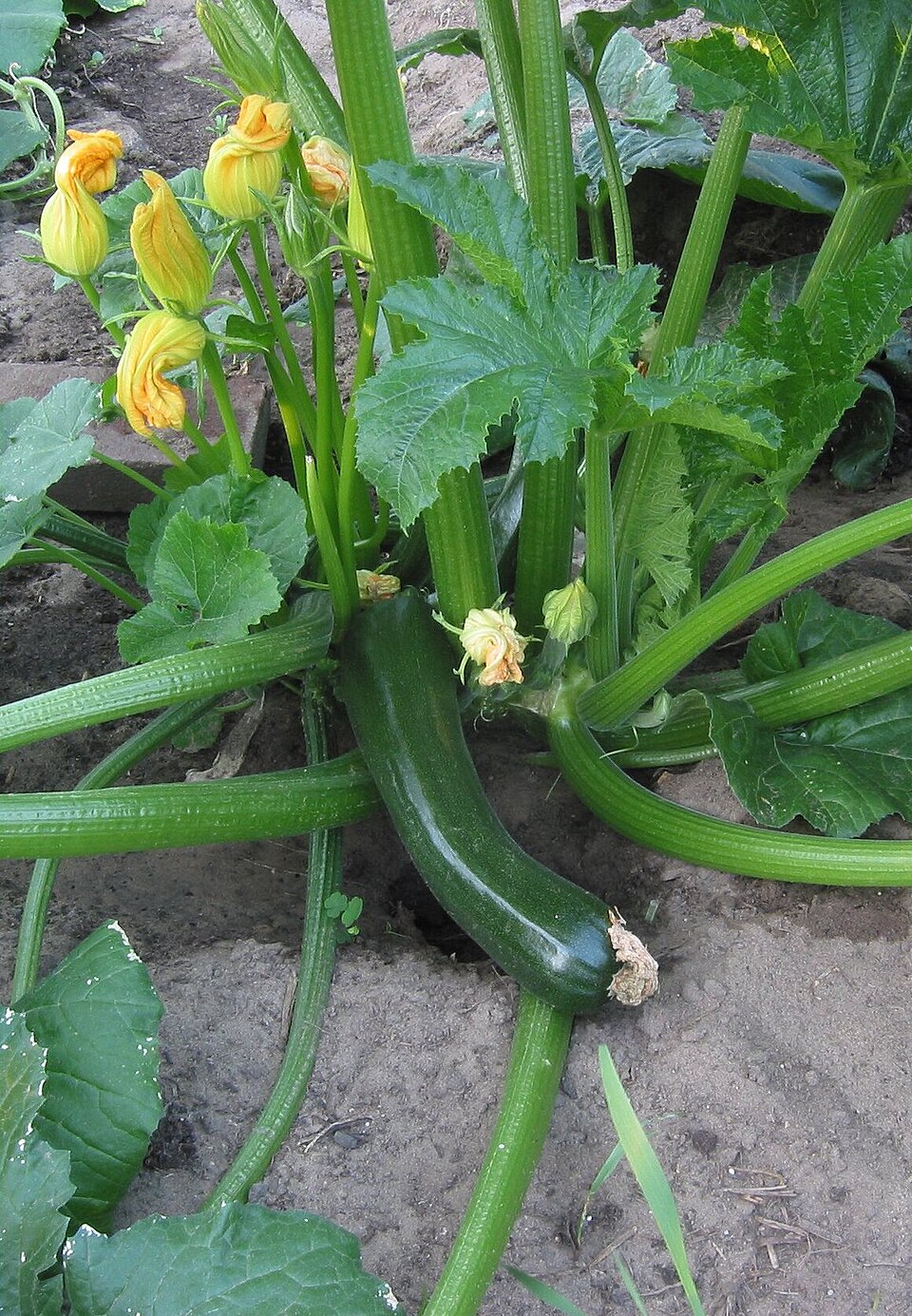
Cucurbita pepo
Zucchini, pumpkin
A singular case among crops: some cultivars of subspecies pepo take up persistent, highly hydrophobic organic pollutants (DDE, PCBs, dioxins) from soil and move them to the stems, which almost no other plant does. It is at once a phytoextraction option and a food-safety risk.
How it works
- Mechanisms
- phytoextraction
Contaminants
| Contaminant | Evidence | What was shown |
|---|---|---|
| DDT and breakdown products | field | Field study with 21 cultivars on soil with weathered p,p'-DDE: mean bioconcentration factors of 7.22 (roots) and 5.40 (stems) for subspecies pepo, against 2.37 and 0.454 for subspecies texana; share of DDE extracted from soil 0.301% against 0.065%, with a maximum of 0.780% (White et al. 2003). |
| Polychlorinated biphenyls | field | A site contaminated with Aroclor 1254 and 1260 (21 µg/g in soil on average), pumpkin grown for two years: in the second year 11 µg/g PCBs in stems and 8.9 µg/g in leaves (5.7 and 3.9 the first year), up to 43 µg/g in lower stems, i.e. bioaccumulation factors up to 2; transfer is by root uptake and translocation (Whitfield Åslund et al. 2008). |
| Dioxins and furans | greenhouse | The first paper to show that cucurbits, zucchini and pumpkin in particular, transfer PCDD and PCDF from soil to fruit far more than other vegetables (Hülster et al. 1994). |
Limits
The share removed per season is under 1% of the contaminant present: many decades would be needed. Only subspecies pepo accumulates. The same mechanism carries the contaminant into the fruit: zucchini and pumpkins must not be grown for eating on soils with DDE, PCBs or dioxins. Dense planting lowers both yield and accumulation (Whitfield Åslund et al. 2008).
Where it has been tried
Brescia-Caffaro
PhytoremediationGreenhouse, with soil from the site
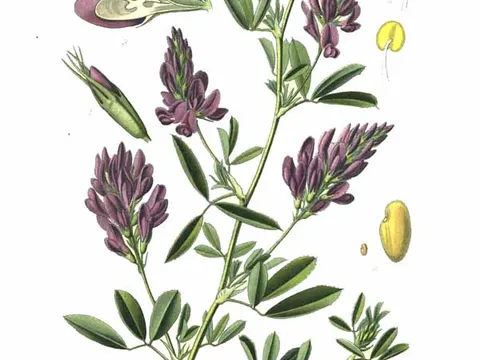
Festuca arundinacea, Cucurbita pepo subsp. pepo, Medicago sativa, Phalaris arundinacea
Greenhouse rhizoremediation trial on farm soil from the SIN contaminated with aged PCBs (mg/kg range), in 6 kg pots to approach field conditions. Ten treatments in triplicate: seven species (grasses and trees) and five growing conditions (single species, intercropping, redox cycle by flooding, added compost or ammonium thiosulfate), with unplanted controls, for 18 months. The same experiment produced soil half-lives for PCBs and for dioxins and furans.
Outcome After 18 months total PCBs had fallen by 14–20%. The best treatments (about 20%) were Festuca arundinacea with compost, Festuca arundinacea grown with Cucurbita pepo, and Medicago sativa with Rhizobium and mycorrhizal fungi. PCB half-lives ranged from 1.3 to 5.6 years. For dioxins and furans only Festuca arundinacea gave a significant reduction (11–24% depending on the congener; half-lives 2.5–5.8 years). In a later column test, soil grown with Medicago sativa released about twice as much PCB in leachate, bound to particulate organic carbon.
- Terzaghi E. et al. Rhizoremediation of weathered PCBs in a heavily contaminated agricultural soil: results of a biostimulation trial in semi field conditions. Science of the Total Environment 686:484-496, 2019
- Terzaghi E. et al. A new dataset of PCB half-lives in soil: effect of plant species and organic carbon addition on biodegradation rates in a weathered contaminated soil. Science of the Total Environment 750:141411, 2021
- Terzaghi E. et al. New data set of polychlorinated dibenzo-p-dioxin and dibenzofuran half-lives: natural attenuation and rhizoremediation using several common plant species in a weathered contaminated soil. Environmental Science & Technology 54:10000-10011, 2020
- Terzaghi E. et al. Plants radically change the mobility of PCBs in soil: role of different species and soil conditions. Journal of Hazardous Materials 388:121786, 2020
PhytoremediationGreenhouse, with soil from the site, 2015–2016
Festuca arundinacea, Phalaris arundinacea, Cucurbita pepo subsp. pepo, Medicago sativa, Brassica juncea, Salix caprea, Athyrium filix-femina
The University of Insubria, the University of Milan and ERSAF took about 2,500 kg of soil from the site and grew plants on it in a greenhouse for 18 months (May 2015 – November 2016) in 6 kg pots: ten treatments in triplicate with seven species, intercropping, compost, redox cycles and ammonium thiosulphate, with unplanted controls. It is a semi-field trial, not an open-field one.
Outcome After 18 months total PCBs had fallen by 14–20%. The best treatments (Festuca arundinacea with compost or intercropped with pumpkin; alfalfa with Rhizobium and mycorrhizal fungi) reached about 20%. For dioxins and furans tall fescue alone gave reductions of 11–24% depending on the congener, with half-lives of 2.5–5.8 years. The authors name the short duration, against the persistence of these compounds, as a limit.
- Terzaghi et al., Rhizoremediation of weathered PCBs in a heavily contaminated agricultural soil: results of a biostimulation trial in semi field conditions, Science of the Total Environment, 2019
- Terzaghi et al., New data set of PCDD/F half-lives: natural attenuation and rhizoremediation using several common plant species in a weathered contaminated soil, Environmental Science & Technology, pmc.ncbi.nlm.nih.gov, 2020
Sources
- White et al., Environ. Sci. Technol. 37:4368, 2003
- Whitfield Åslund et al., Sci. Total Environ. 405:14, 2008
- Hülster et al., Environ. Sci. Technol. 28:1110, 1994
- White et al., Soil amendments, plant age, and intercropping impact p,p'-DDE bioavailability to Cucurbita pepo, J. Environ. Qual. 35:992, 2006
Draft compiled from public sources, not yet reviewed.
Other species for the same contaminants
Species that the literature reports acting on at least one of this one's contaminants, the closest first.