Plant, tree
Morus spp.
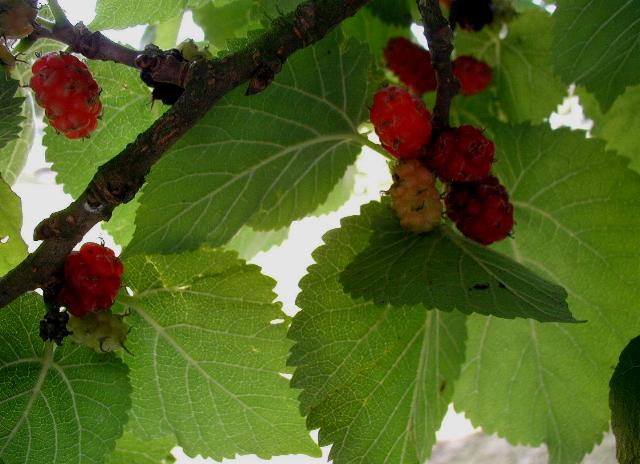
Mulberry
Trees whose flavonoid-rich fine roots feed soil bacteria able to degrade PCBs. Mulberry is the classic example of the idea that root phenolics can act as substrate for the breakdown of recalcitrant pollutants.
How it works
- Mechanisms
- rhizodegradation
Contaminants
| Contaminant | Evidence | What was shown |
|---|---|---|
| Polychlorinated biphenyls | laboratory | In rhizotrons, 58% of the fine roots produced in a six-month season die at its end; phenolics in fine roots double late in the season to 38 mg/g dry weight, mainly through three flavones (morusin, morusinol, kuwanon C), which support growth of Burkholderia sp. LB400, a PCB-degrading bacterium (Leigh et al. 2002). The release of phenols by perennial plant roots and its possible role in bioremediation had been proposed by Fletcher and Hegde (1995).
|
Limits
The evidence concerns the mechanism (substrates that sustain degrading bacteria), not a measured reduction of PCBs in contaminated soil: the sources consulted include no field trial with mulberry that quantifies it. The process is slow and tied to seasonal root turnover. Bacteria growing on the flavones degrade mainly the less chlorinated congeners.
Sources
Draft compiled from public sources, not yet reviewed.
Other species for the same contaminants
Species that the literature reports acting on at least one of this one's contaminants, the closest first.