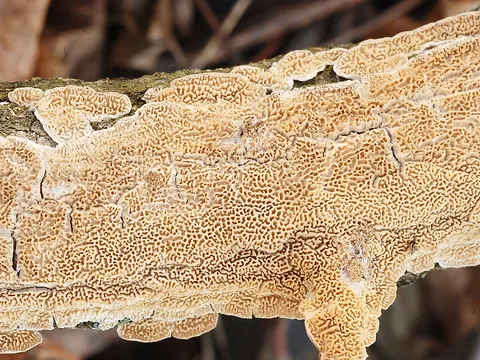
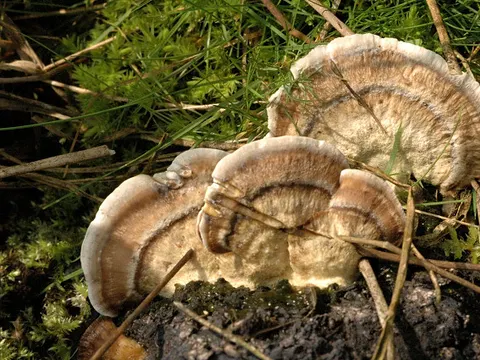
Fungus, white rot
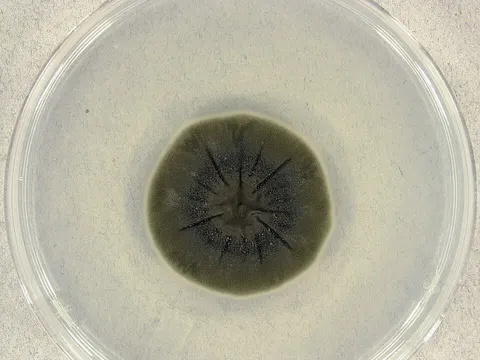
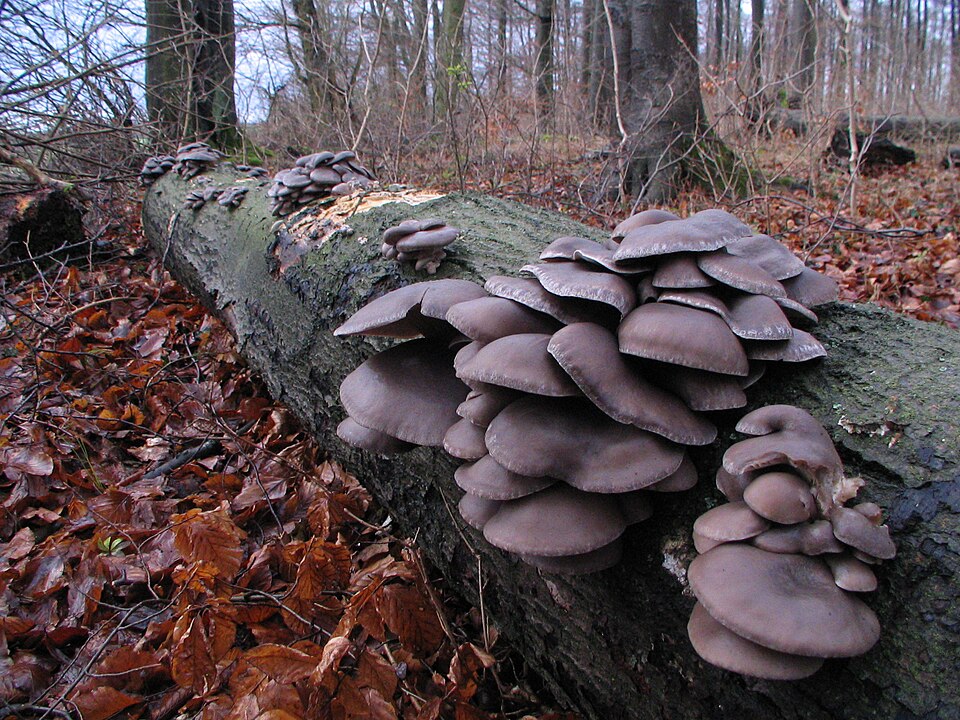
Pleurotus ostreatus
Oyster mushroom
An industrially cultivated white-rot fungus and the species most often used in soil mycoremediation studies: it colonises non-sterile soil from a lignocellulosic carrier and attacks high-molecular-weight PAHs and PCBs that the resident microflora degrades poorly. It is one of the few fungi with a documented field pilot on creosote-contaminated soil.
How it works
- Mechanisms
- mycodegradation
- Enzymes
- laccase, manganese peroxidase
Contaminants
| Contaminant | Evidence | What was shown |
|---|---|---|
| Creosote | field | Wood-preserving site in West Virginia (USA): in the field pilot, with P. ostreatus grown on two local substrate mixtures, total PAHs fell by up to 93.2% in 276 days; all individual PAHs but one reached industrial risk-based concentrations. In the preceding bench treatability test the reduction was up to 67.3% in 56 days. |
| Polycyclic aromatic hydrocarbons | laboratory | Non-sterile soil, 15 weeks: degradation of 4-6-ring PAHs (benzo[a]anthracene, chrysene, benzo[b]- and benzo[k]fluoranthene, benzo[a]pyrene, dibenzo[a,h]anthracene, benzo[ghi]perylene), with 16-69% of individual compounds recovered at the end; the fungus mainly enhanced the disappearance of 5-6-ring compounds. In creosote soil (50-200 mg/kg PAH) at 15 °C for 120 days removal was 55-67%: 86-96% for 2-ring and 31-38% for 5-6-ring PAHs.
|
| Polychlorinated biphenyls | laboratory | Long-term PCB-contaminated dumpsite soils, 12-week microcosms: 18.5%, 41.3% and 50.5% removal from bulk, surface and rhizosphere soil respectively. Hydroxylated and methoxylated PCBs, chlorobenzoates and chlorobenzyl alcohols were identified, showing that the aromatic ring is oxidised and cleaved. |
Limits
Degradation tracks bioavailability: in aged PAH contamination only a few compounds are removed beyond their bioavailable fraction (Covino et al. 2010). The fungus needs a lignocellulosic carrier (straw, pellets, corn cobs) and does not persist in soil without it. Cd at 500 ppm cancels the fungal contribution, and Hg at 50-100 ppm or Cd at 100-500 ppm limits soil colonisation (Baldrian et al. 2000). PCB removal ranges from 18 to 50% depending on the soil. Published field trials are few and at pilot scale.
Where it has been tried
Canale dei Navicelli, sedimenti di dragaggio
MycoremediationLaboratory, with soil from the site
Lambertella sp. MUT 5852, Pleurotus ostreatus
The University of Pisa (Becarelli, Siracusa, Di Gregorio and colleagues) isolated from the sediments four ascomycetes able to degrade diesel. The Lambertella strain was added to the sediments co-composted with lignocellulosic residues; a later study compared it with co-composting on spent Pleurotus ostreatus substrate.
Outcome With Lambertella 47.6% of total hydrocarbons were degraded in two months. In the later comparison adding the strain proved necessary to bring hydrocarbons down: spent Pleurotus substrate alone was not enough.
- Becarelli et al., Hydrocarbonoclastic Ascomycetes to enhance co-composting of total petroleum hydrocarbon (TPH) contaminated dredged sediments and lignocellulosic matrices, New Biotechnology, 2019
- Becarelli et al., Ascomycetes versus spent mushroom substrate in mycoremediation of dredged sediments contaminated by total petroleum hydrocarbons, Water, mdpi.com, 2021
Czech Republic, wood-preserving plant (creosote soil)
MycoremediationLaboratory, with soil from the site
Pleurotus ostreatus, Irpex lacteus
Byss, Elhottová, Tříska and Baldrian incubated the soil with the two fungi at 15 °C for 120 days, following PAHs and the microbial community.
Outcome Pleurotus ostreatus removed 55–67% of PAHs, Irpex lacteus 27–36%. By class: 86–96% (Pleurotus) and 47–59% (Irpex) of 2-ring compounds, but only 31–38% and 11–13% of 5–6-ring ones. Both fungi lowered bacterial biomass. It is a laboratory trial.
Ringe (former coal-tar storage) and B&W shipyard soils
MycoremediationField pilot
Pleurotus ostreatus
Hestbjerg, Willumsen, Christensen, Andersen and Jacobsen mixed into the soils the refuse substrate of commercial Pleurotus ostreatus production, outdoors, in concrete cylinders (50 cm × 60 cm) in triplicate, with controls without additions and with autoclaved sawdust; 21 PAHs measured.
Outcome In the Ringe soil, after nine weeks, 3-ring PAHs had fallen by 78% and 4-ring ones by 41%, while 5–6-ring ones by only 4%. The reduction went with high initial laccase activity and a rise in degrading bacteria. The heaviest compounds, the most toxic, were left almost untouched.
Santa Cruz Mountains, CZU Lightning Complex burn area
MycoremediationField pilot, 2021–
Pleurotus ostreatus
The non-profit CoRenewal laid straw wattles inoculated with Pleurotus mycelium (a local strain supplied by Far West Fungi) along the slopes below burnt houses, with uninoculated wattles as controls, and took baseline samples above and below the wattles.
Outcome No measured result in the source consulted (May 2021): the group planned to resample after one or two years. The effectiveness of inoculated wattles after wildfires is still to be shown.
Sources
- Lamar, White & Ashley (2002) Remediation Journal 12:97-106, 2002
- Baldrian et al. (2000) Appl Environ Microbiol 66:2471-2478, 2000
- Byss et al. (2008) Chemosphere 73:1518-1523, 2008
- Covino et al. (2010) Chemosphere 79:855-864, 2010
- Stella et al. (2017) J Hazard Mater 324:701-710, 2017
Draft compiled from public sources, not yet reviewed.
Other species for the same contaminants
Species that the literature reports acting on at least one of this one's contaminants, the closest first.