Fungus, brown rot
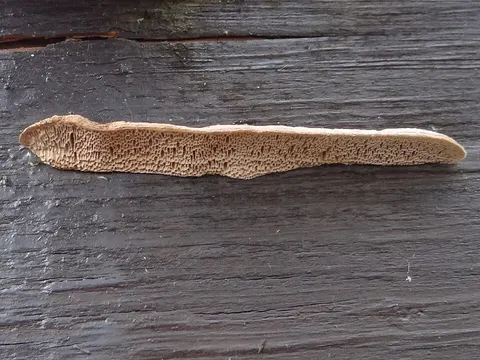
Fomitopsis pinicola
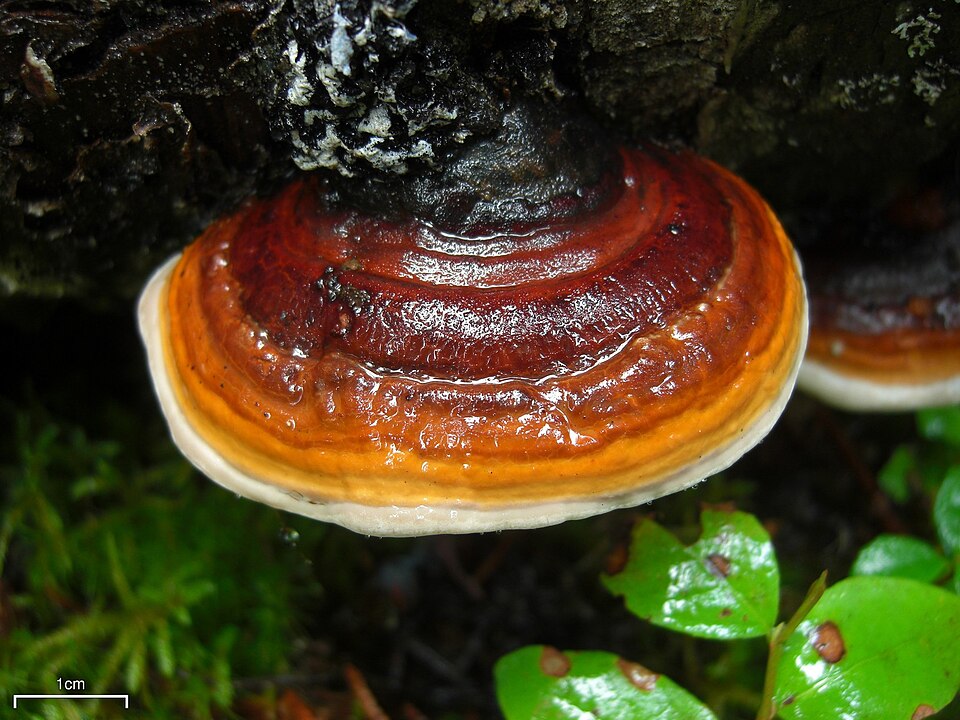
Red-belted conk
A brown-rot fungus of conifer forests. It is among the brown-rot species most able to degrade DDT in culture. A species of the same genus, F. palustris, has been used to extract copper, chromium and arsenic from CCA-treated wood through the oxalic acid it produces.
How it works
- Mechanisms
- mycodegradation
Contaminants
| Contaminant | Evidence | What was shown |
|---|---|---|
| DDT and breakdown products | laboratory | Of 12 brown-rot species tested in potato dextrose broth, F. pinicola is one of the three (with Gloeophyllum trabeum and Daedalea dickinsii) showing a high ability to degrade DDT. |
| Arsenic | laboratory | Data for Fomitopsis palustris: CCA-treated wood sawdust placed in the fermentation broth together with the fungal inoculum; 98% of arsenic, 92% of chromium and 96% of copper removed. This is biological acid leaching of a waste, not soil treatment. |
| Chromium | laboratory | Fomitopsis palustris, same process: 92% of chromium removed from CCA-treated wood sawdust. |
| Copper | laboratory | Fomitopsis palustris, same process: 96% of copper removed from CCA-treated wood sawdust. |
Limits
For F. pinicola the DDT result is a liquid-culture screening with no percentages in the abstract consulted. The CCA wood results belong to another species of the genus and to a fermenter: the metals move into an acidic liquid that then needs treatment. No field trial was found.
Sources
- Purnomo, Kamei & Kondo (2008) J Biosci Bioeng 105:614-621, 2008
- Kim, Choi & Kim (2009) Environ Technol 30:673-679, 2009
Draft compiled from public sources, not yet reviewed.
Other species for the same contaminants
Species that the literature reports acting on at least one of this one's contaminants, the closest first.