Plant, aquatic plant
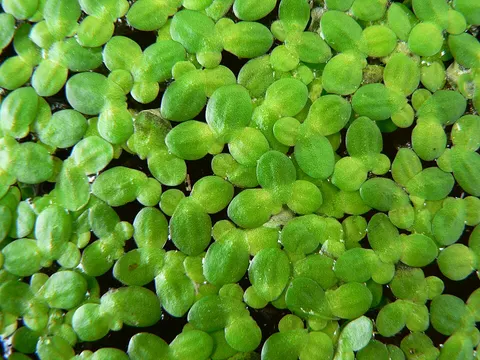
Azolla caroliniana
Carolina mosquito fern
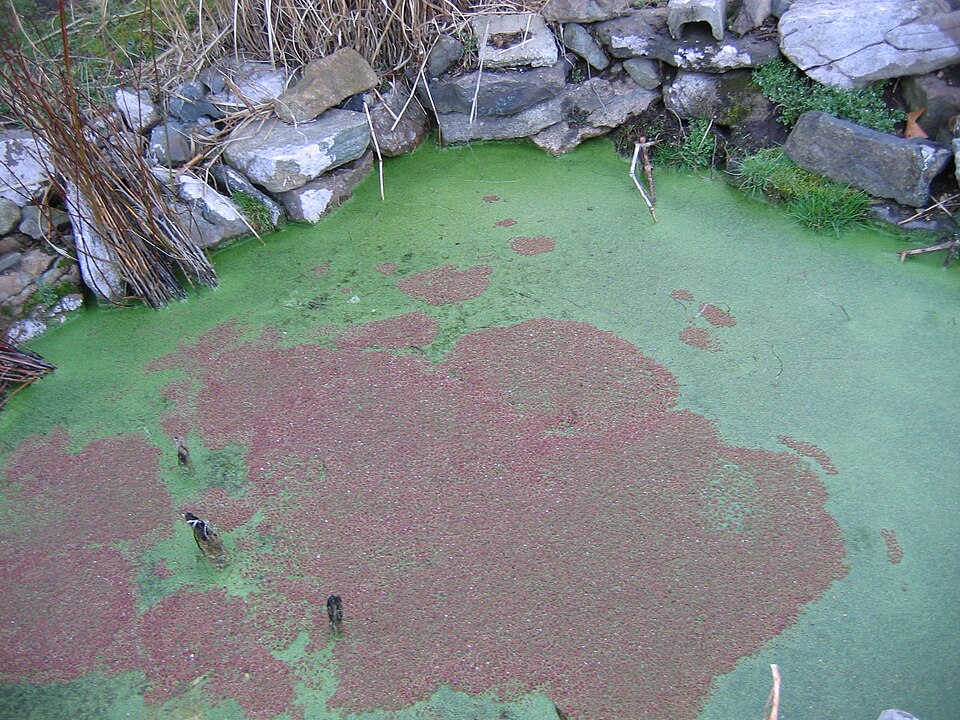
A small floating fern living in symbiosis with a nitrogen-fixing cyanobacterium and growing fast on nitrogen-poor water. In the laboratory it removes mercury and chromium from wastewater; the related Azolla filiculoides has also been studied as dead sorbent biomass.
How it works
- Mechanisms
- rhizofiltrationbiosorption
Contaminants
| Contaminant | Evidence | What was shown |
|---|---|---|
| Mercury | laboratory | Twelve days in solution with Hg(II), Cr(III) or Cr(VI) at 0.1, 0.5 and 1.0 mg/dm³: metals in solution fell by 74–100%; in tissues from 71 to 964 mg/kg dry matter; growth inhibited by 20–31%, most with mercury (Bennicelli et al. 2004). |
| Hexavalent chromium | laboratory | In the same test removal reached 100% for chromate at 0.1 mg/dm³; the highest tissue value came with Cr(III) (Bennicelli et al. 2004). |
| Arsenic | laboratory | It accumulates arsenic, but 20 µM As cuts biomass by 30% (Rofkar et al. 2014). In A. filiculoides, at pH 5 and 30 µM As, 15 µg/g fresh weight with moderate growth; above 40 µM growth turns negative (Biswas and Ganesan 2024).
|
Limits
Laboratory data only, at concentrations of 1 mg/L or less; even at those doses growth falls by a fifth or more. The sources consulted include no pilot plants. Biomass must be harvested and disposed of, or it releases the metals. American azollas are alien in Europe and can cover canals and ponds.
Sources
- Bennicelli et al., Chemosphere 55:141, 2004
- Rofkar et al., Int. J. Phytoremediation 16:155, 2014
- Biswas and Ganesan, Plant Physiol. Biochem. 214:108956, 2024
Draft compiled from public sources, not yet reviewed.
Other species for the same contaminants
Species that the literature reports acting on at least one of this one's contaminants, the closest first.