Plant, aquatic plant
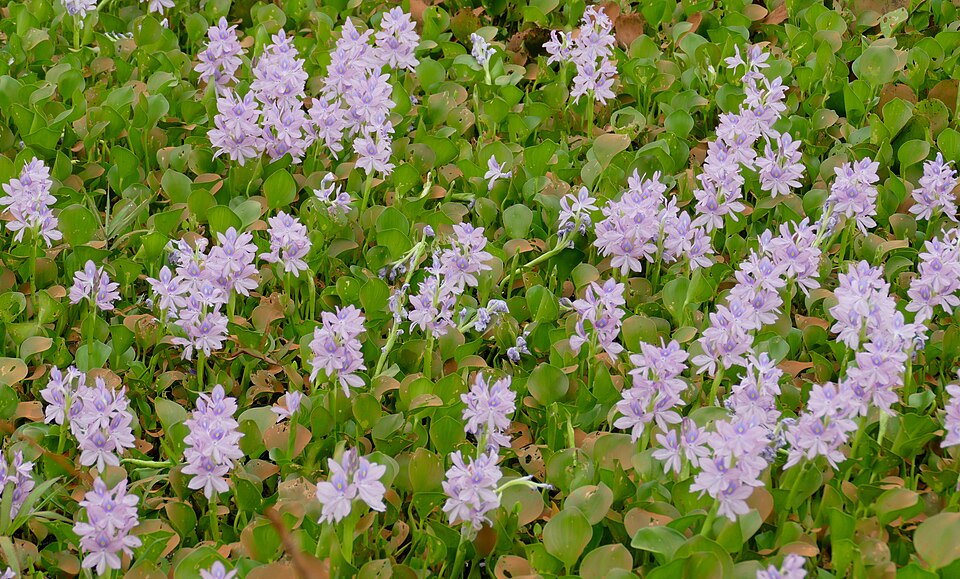
Eichhornia crassipes
Water hyacinth
A floating plant of extremely fast growth, with dense roots that hold metals from water. It is effective for cadmium, chromium and mercury in tanks, but in the European Union it is a banned invasive species: it can be used only in closed systems and where permitted.
How it works
- Mechanisms
- rhizofiltrationphytoextraction
Contaminants
| Contaminant | Evidence | What was shown |
|---|---|---|
| Mercury | field | A pilot wetland plant for artisanal gold-mining wastewater (62.4 µg/L total mercury, 50 days, one-hour retention time): mercury lowered by 89%; thermal treatment of the biomass at 400 °C then separated on average 87% of the mercury from the tissues (Gomez et al. 2025). |
| Cadmium | laboratory | In solution, with six elements supplied singly (As, Cd, Cr, Cu, Ni, Se): it accumulates Cd and Cr best, Se and Cu moderately, As and Ni poorly. Highest Cd: 371 mg/kg in shoots and 6,103 mg/kg in roots (dry weight) (Zhu et al. 1999). |
| Hexavalent chromium | laboratory | With chromium supplied as Cr(VI): up to 119 mg/kg in shoots and 32,951 mg/kg in roots (Zhu et al. 1999).
|
Limits
It is on the list of invasive alien species of Union concern (Commission Implementing Regulation EU 2016/1141): in the Union it may not be kept, grown, transported or released. Where it escapes it covers water bodies. Metal stays almost entirely in the roots, and the watery biomass must be harvested often and treated as contaminated waste. It does not tolerate frost.
Where it has been tried
Sukinda chromite valley
PhytoremediationField scale, 2012
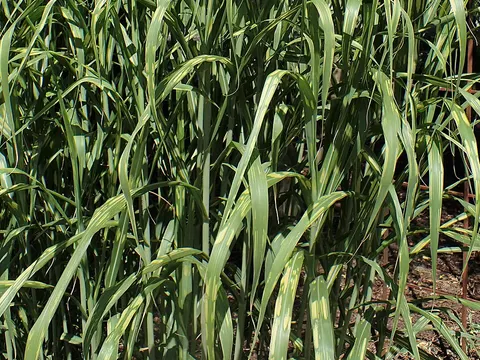
Eichhornia crassipes, Brachiaria mutica
In-situ trial in the South Kaliapani mining area: water hyacinth and paragrass grown on chromite-contaminated effluent and soil, with measurement of chromium bioconcentration in the plants.
Outcome Over 100 days hexavalent chromium fell by 24–54% with water hyacinth and by 18–33% with paragrass; the highest bioconcentration factor and transport index values were recorded for water hyacinth.
PhytoremediationField scale, 2023
Eichhornia crassipes
Treatment of the effluent from the South Kaliapani chromite mine with water hyacinth.
Outcome Chromium reduced by 53.5% at 100 days after treatment.
Sources
- Zhu et al., J. Environ. Qual. 28:339 (record in the UK Air Pollution Information System), apis.ac.uk, 1999
- Gomez et al., Environ. Sci. Pollut. Res. 32:798, 2025
- Commission Implementing Regulation (EU) 2016/1141 adopting a list of invasive alien species of Union concern, European Commission, 2016
Draft compiled from public sources, not yet reviewed.
Other species for the same contaminants
Species that the literature reports acting on at least one of this one's contaminants, the closest first.