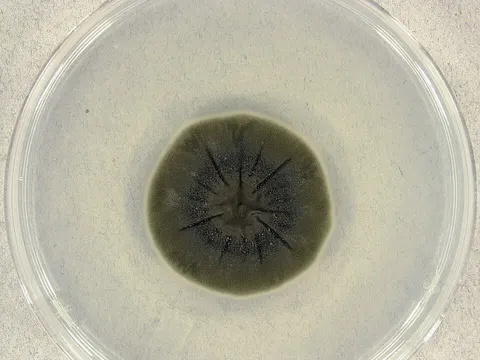
Plant, grass
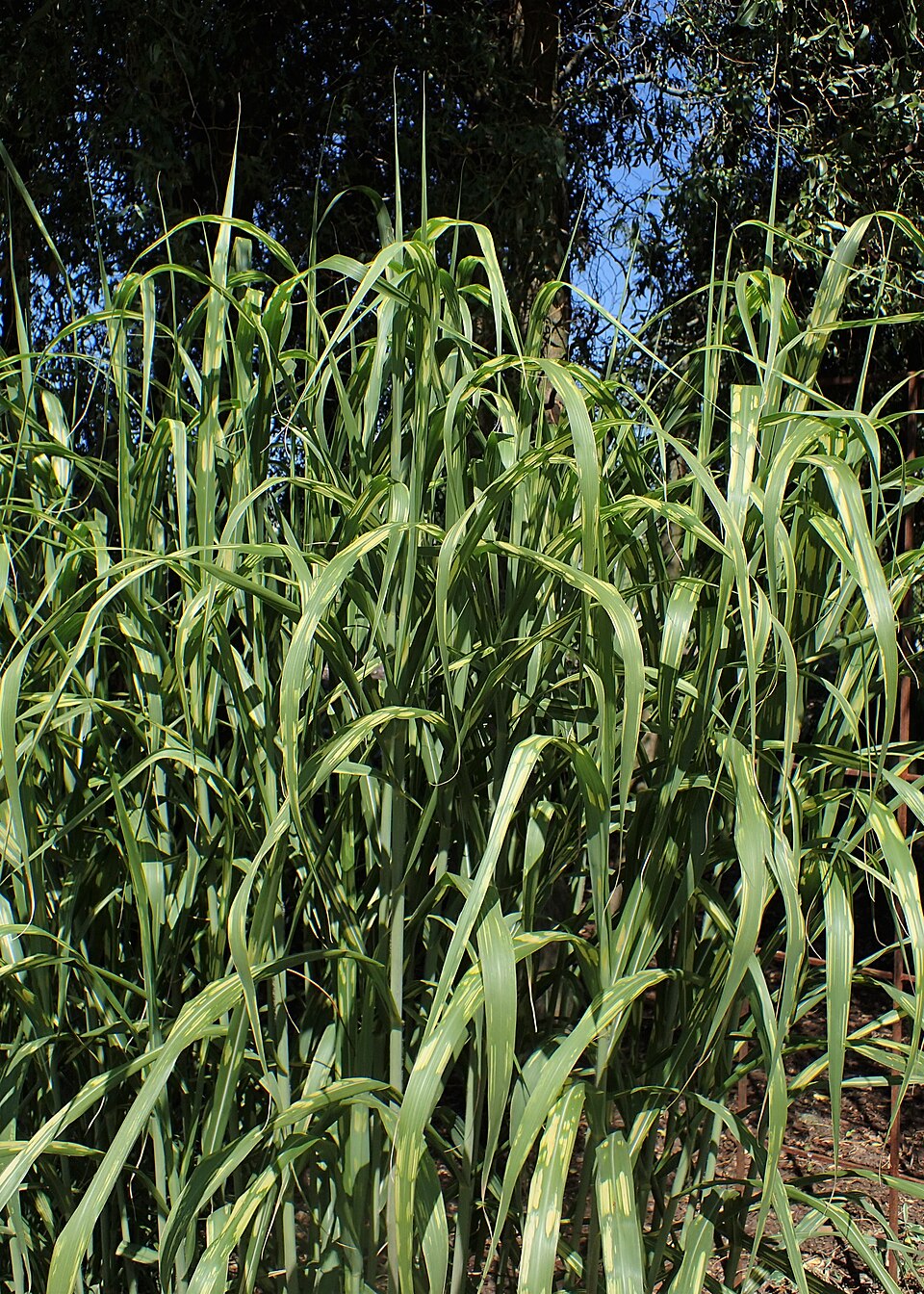
Miscanthus × giganteus
Giant miscanthus
A perennial biomass grass, a sterile and therefore non-invasive hybrid. It holds metals in its roots and limits their transfer to stems: it serves to stabilise contaminated soils while yielding energy biomass.
How it works
- Mechanisms
- phytostabilisationrhizodegradation
- Native range
- Sterile hybrid, cultivated
Contaminants
| Contaminant | Evidence | What was shown |
|---|---|---|
| Cadmium | field | Field experiment on three agricultural plots with a gradient of Cd, Pb and Zn and one uncontaminated: leaf concentrations tolerable for the plant and no difference in antioxidant enzymes, photosynthetic pigments or secondary metabolites against the control (Bastia et al. 2023). In Belgium, on a heavily polluted site, net photosynthesis fell but the crop improved soil biological parameters (Lutts et al. 2024).
|
| Polycyclic aromatic hydrocarbons | greenhouse | The reference review credits Miscanthus species with sequestering inorganic contaminants in the root system and promoting the dissipation of persistent organic contaminants in soil (Nsanganwimana et al. 2014). |
Limits
It does not remove metals: it keeps them in the soil, in the root zone. The site stays contaminated and must be managed indefinitely. It propagates only by rhizomes, with high establishment costs. Much of the data comes from pot trials or spiked soils (Bastia et al. 2023).
Where it has been tried
Metaleurop Nord (Noyelles-Godault)
PhytoremediationField scale, 2007–
Miscanthus × giganteus
PHYTENER project: three fields of about 1 ha each planted with miscanthus in 2007 on former farmland with different metal levels, and a fourth in 2010, 700 m from the smelter, to compare varieties and farming practices (rhizome density, fertilisation, mycorrhization). Aim: phytostabilisation combined with energy biomass production.
Outcome On the contaminated soils miscanthus accumulates Cd, Pb and Zn mainly in roots and limits their transfer to rhizomes, stems and leaves: it behaves as an excluder, suited to phytostabilisation (2023 study, read from a search extract).
- Pourrut B. et al. The PHYTENER project: development of phytostabilisation combined with energy crop production on agricultural soils highly contaminated by metals. Geophysical Research Abstracts 13, EGU2011-9395, meetingorganizer.copernicus.org, 2011
- Evaluation of Miscanthus × giganteus tolerance to trace element stress: field experiment with soils possessing gradient Cd, Pb, and Zn concentrations, ncbi.nlm.nih.gov, 2023
PhytoremediationField scale, 1999–
Miscanthus × giganteus, Robinia pseudoacacia, Alnus glutinosa, Quercus robur, Acer pseudoplatanus, Salix alba
The PHYTENER project (ISA Lille and ten other laboratories, funded by ADEME): one hectare planted in 1999 with about 1,800 trees of five species, 600 m north of the smelter; three fields of about one hectare under miscanthus since 2007 on soils with different contamination levels, and a fourth since 2010 to test cultivars, planting density, fertilisation and mycorrhizae.
Outcome Miscanthus accumulates the metals mainly in its roots and passes little to the stems: yields rose from 3.7–10.3 t/ha of dry matter in the second year to 15.8–23.3 t/ha in the third. This is phytostabilisation with biomass production: the metals stay in the soil.
- Nsanganwimana et al., Metal accumulation and shoot yield of Miscanthus × giganteus growing in contaminated agricultural soils: insights into agronomic practices, Agriculture, Ecosystems & Environment, 2015
- Pourrut et al., The PHYTENER project: development of phytostabilisation combined with energy crop production on agricultural soils highly contaminated by metals, EGU General Assembly, meetingorganizer.copernicus.org, 2011
Shimen realgar mine
PhytoremediationField scale
Pteris vittata, Miscanthus spp.
Revegetation of the realgar tailings pond (2,883 mg/kg of arsenic): imported soil cover and fertiliser, then planting of Pteris vittata or miscanthus, as combined phytoextraction and phytostabilisation. Case reported by the review of Cao and colleagues (2022); the original study was not read and the review gives the Chinese common name of the miscanthus without the species.
Outcome After five years a stable plant cover had established on the tailings dam, with 39 plant species (Cao and colleagues 2022).
North-east England, five brownfield sites (BioReGen)
PhytoremediationField scale
Phalaris arundinacea, Miscanthus spp., Salix spp., Panicum virgatum
R. Lord amended each site with about 500 t/ha of green-waste compost, planted short-rotation willow, miscanthus, reed canarygrass and switchgrass, and harvested for 3–5 years, measuring yields and contaminants in the biomass.
Outcome Reed canarygrass outdid the other species in ease of establishment, cost, time, yield and contamination of the biomass: 4–7 oven-dry t/ha a year from the second season, at contaminant levels acceptable for domestic pellets. This is biomass production on contaminated land, not contaminant removal.
Sources
- Nsanganwimana et al., J. Environ. Manage. 143:123, 2014
- Bastia et al., Plants 12:1560, 2023
- Lutts et al., Heliyon 10:e25943, 2024
Draft compiled from public sources, not yet reviewed.
Other species for the same contaminants
Species that the literature reports acting on at least one of this one's contaminants, the closest first.