Plant, herb
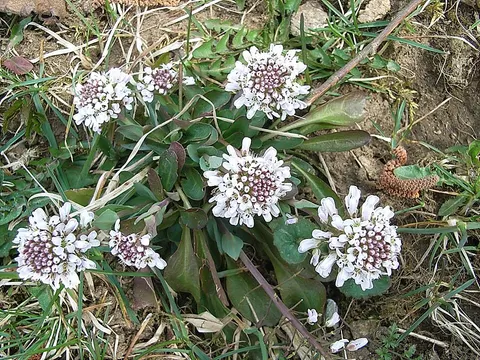
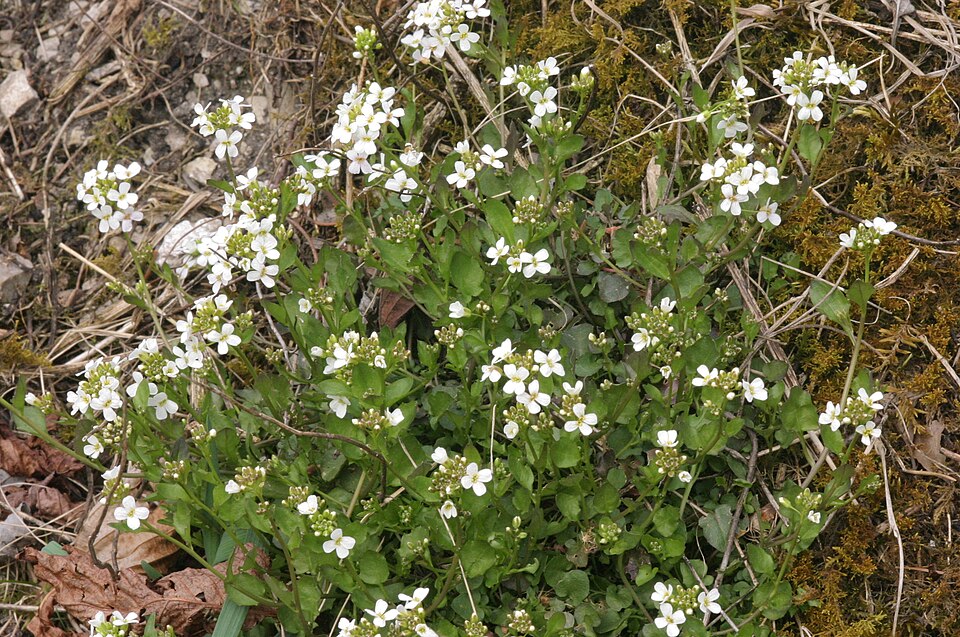
Arabidopsis halleri
Haller's rockcress
A close relative of Arabidopsis thaliana that hyperaccumulates zinc and cadmium in its leaves. It matters mainly as a model for the mechanisms of hyperaccumulation; in the field it has been compared with Noccaea caerulescens.
How it works
- Mechanisms
- hyperaccumulationphytoextraction
Contaminants
| Contaminant | Evidence | What was shown |
|---|---|---|
| Zinc | field | Survey of 33 wild populations (20 on metalliferous sites, 13 not): Zn accumulation in shoots is a constitutive trait of the species, present in populations from uncontaminated soils too (Bert et al. 2002). In the UK field trials it accumulated Zn concentrations similar to N. caerulescens (McGrath et al. 2006). |
| Cadmium | field | It hyperaccumulates Cd as well, but the ability varies between populations (Bert et al. 2002); in the field it reached lower Cd concentrations than N. caerulescens (McGrath et al. 2006). In hydroponics Zn and Cd concentrate in the leaf mesophyll and at the base of trichomes (Küpper et al. 2000). |
Limits
A small, low-biomass plant: the amount of metal removed per hectare stays modest. It does not accumulate lead (Bert et al. 2002). Its value is mostly scientific.
Where it has been tried
Woburn Experimental Farm, sludge-treated plots
PhytoremediationField scale, 1998–2000
Noccaea caerulescens (Thlaspi caerulescens), Arabidopsis halleri
McGrath, Lombi, Zhao and colleagues (Rothamsted Research) field-tested two hyperaccumulators with mobilising agents, different sowing strategies and growing seasons of different length.
Outcome No mobilising agent raised accumulation. On average, between 1998 and 2000, Thlaspi removed 1.3% of total soil cadmium and 0.3% of zinc; in one 14-month season, 21.7% of the cadmium and 4.4% of the zinc. The authors judge the technique usable for soils moderately contaminated with cadmium, not for zinc.
Sources
- Bert et al., New Phytol. 155:47, 2002
- Küpper et al., Planta 212:75, 2000
- McGrath et al., Environ. Pollut. 141:115, 2006
Draft compiled from public sources, not yet reviewed.
Other species for the same contaminants
Species that the literature reports acting on at least one of this one's contaminants, the closest first.