Plant, crop
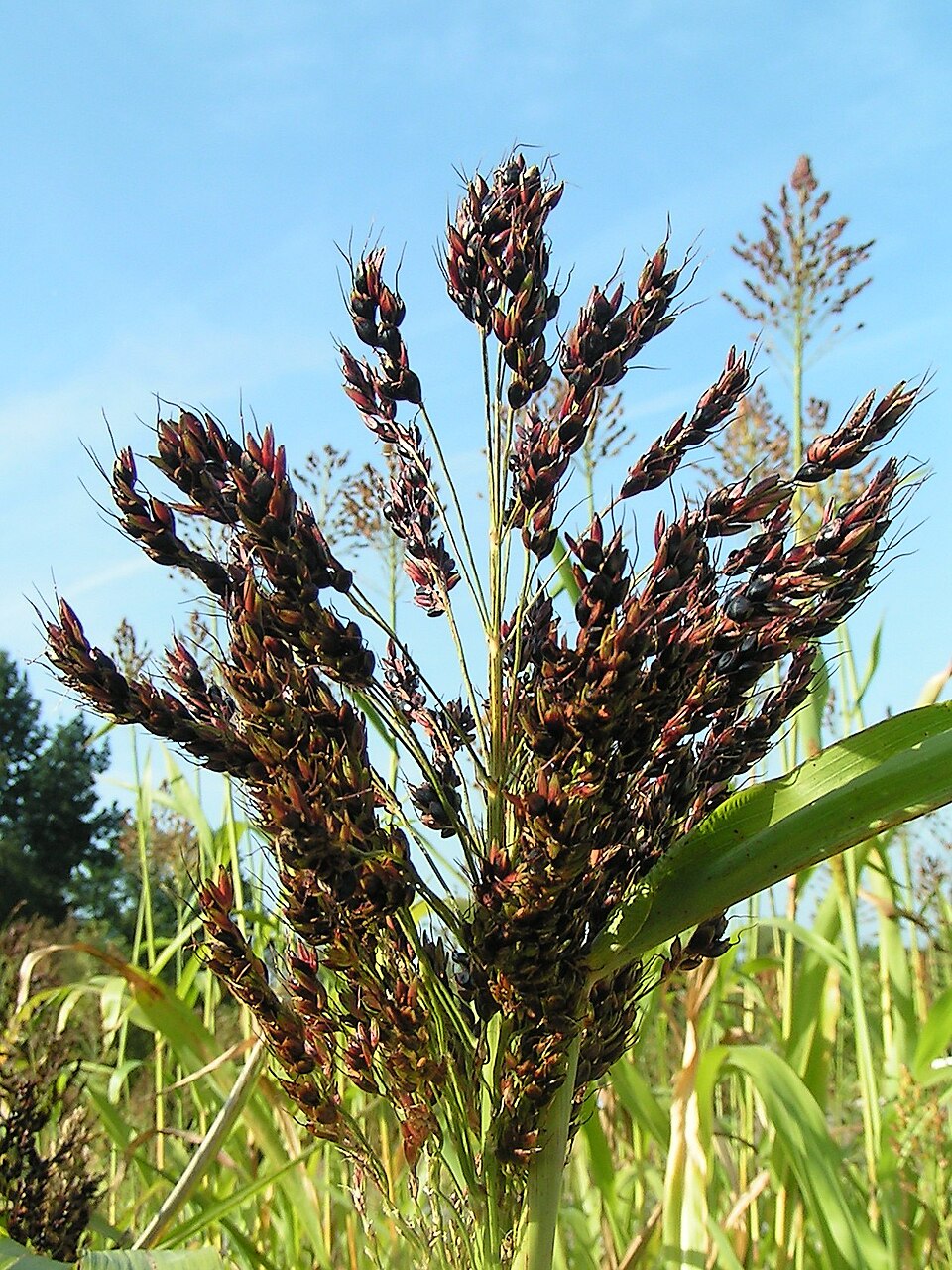
Sorghum bicolor
Sorghum
A drought-tolerant biomass cereal, used as an energy crop on contaminated soils. It removes modest amounts of metals but yields much non-food biomass; in Italy it was field-tested at Torviscosa.
How it works
- Mechanisms
- phytoextraction
Contaminants
| Contaminant | Evidence | What was shown |
|---|---|---|
| Zinc | field | At Torviscosa (Udine), on soil polluted by pyrite cinders with 980 mg/kg Zn, removal of about 2,000 g Zn/ha, twice that of sunflower in the same trial (Marchiol et al. 2007). |
| Cadmium | field | In a three-year unfertilised trial on smelter-polluted alluvium (Příbram, Czechia), it is among the herbaceous crops the authors recommend for Cd, Zn and Pb phytoextraction; woody species, willows in particular, extracted more (Mayerová et al. 2017). |
Limits
Removal on the order of 2 kg of zinc per hectare: not enough to clean a soil in a useful time. Organic amendment can bind metals and lower uptake (Marchiol et al. 2007). It makes sense as a non-food crop giving income while the site stays under control; the end use of the biomass must be checked.
Where it has been tried
Caffaro di Torviscosa (formerly Grado and Marano Lagoon)
PhytoremediationField scale, 2005
Sorghum bicolor, Helianthus annuus
The University of Udine (Marchiol, Fellet, Perosa, Zerbi) grew sorghum and sunflower in randomised blocks on soil with As 309, Cd 4.29, Co 50.9, Cu 1,527 and Zn 980 mg/kg, comparing mineral fertiliser, organic amendment and a control, with relief irrigation.
Outcome Fertiliser and amendment raised biomass a great deal but not the metal concentration in the harvested tissue; in some cases organic matter made the elements less available. Zinc removal was about 2,000 g/ha with sorghum and 1,000 g/ha with sunflower: small amounts against what the soil holds.
Sources
- Marchiol et al., Plant Physiol. Biochem. 45:379, 2007
- Mayerová et al., Environ. Sci. Pollut. Res. 24:14706, 2017
Draft compiled from public sources, not yet reviewed.
Other species for the same contaminants
Species that the literature reports acting on at least one of this one's contaminants, the closest first.