Plant, crop
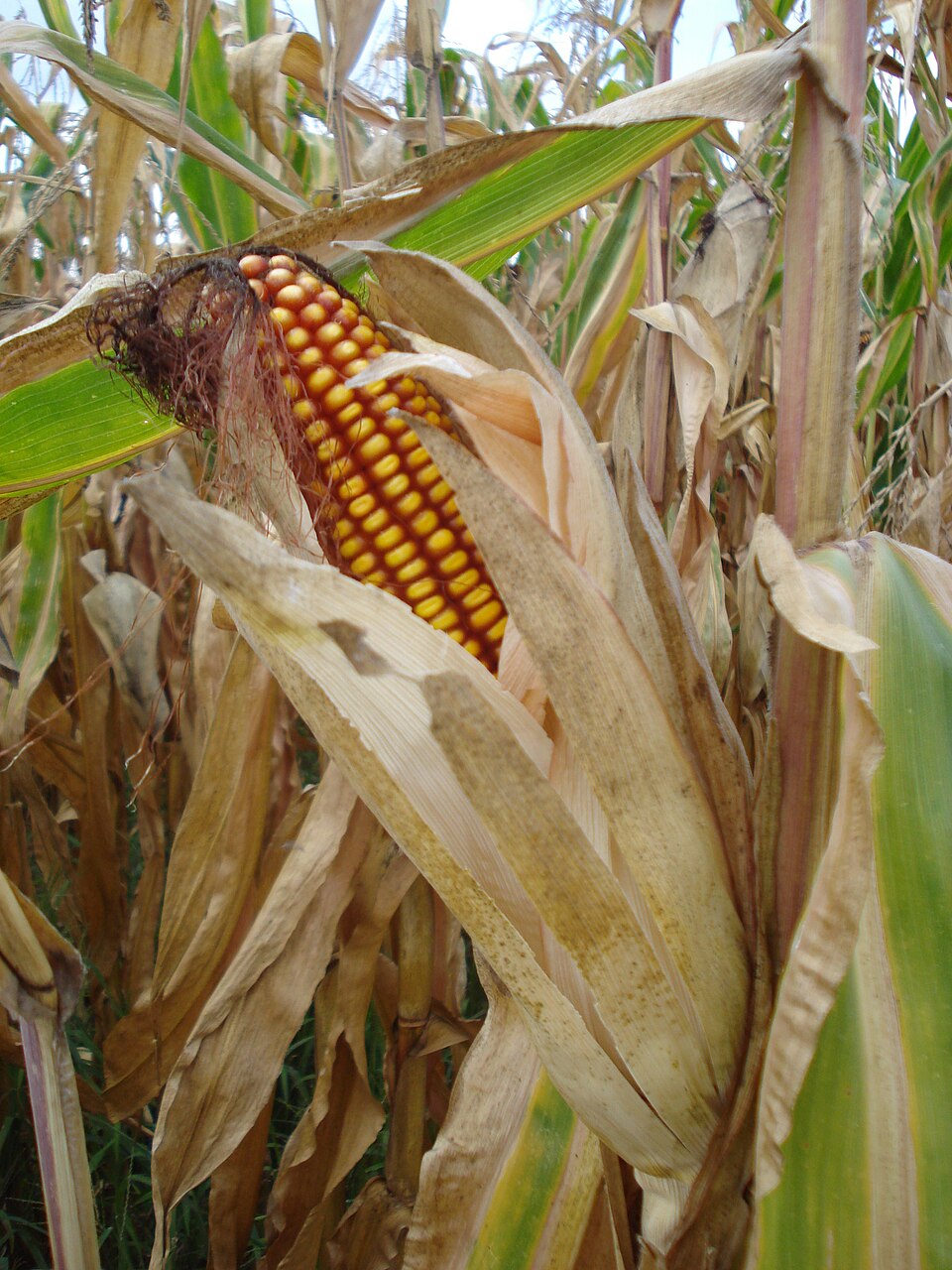
Zea mays
Maize
A high-biomass crop used on moderately contaminated farmland as energy maize. The aim is not to clean the soil but to use it without risk to the food chain, with a slow decline in metals: the Belgian authors called this phytoattenuation.
How it works
- Mechanisms
- phytoextraction
Contaminants
| Contaminant | Evidence | What was shown |
|---|---|---|
| Zinc | field | Field experiment in the Belgian Campine, a region of about 700 km² contaminated by historic deposition of Cd, Zn and Pb: annual reduction of 0.4–0.7 mg/kg Zn in the topsoil; very low removal for Cd and Pb. The crop can give 33,000–46,000 kWh of renewable energy per hectare per year (Meers et al. 2010). |
| Cadmium | field | In the same experiment cadmium removal was very low (Meers et al. 2010). Intercropped with Sedum plumbizincicola, maize grain stayed within the Chinese national Cd limit while the hyperaccumulator extracted the metal (Deng et al. 2016). |
Limits
It does not clean up: under 1 mg/kg of zinc per year, almost nothing for cadmium and lead. It is risk management that makes sense only if the biomass has an outlet (biogas) and metals in the digestate are kept under control.
Where it has been tried
Kasur tanneries
PhytoremediationGreenhouse, with soil from the site
Zea mays
Pot trial on tannery-polluted soils from Kasur and Sialkot: four maize cultivars with and without 3% biochar. This is not phytoextraction: the aim is to immobilise chromium and let the crop grow.
Outcome Biochar lowered the available chromium fraction in soil and Cr(VI) and Cr(III) in roots and shoots, and raised height, biomass and photosynthesis; cultivar P-1543 was the most tolerant in both soils. The abstract gives no percentages.
Janghang smelter
Microbial bioremediationLaboratory, with soil from the site
Rhodococcus aetherivorans, Pseudomonas koreensis, Zea mays
Isolation of 21 arsenic-tolerant bacteria from soils near to and away from the smelter (genera Brevibacterium, Pseudomonas, Microbacterium, Rhodococcus, Rahnella, Paenibacillus) and laboratory testing of their plant-growth-promoting traits, with assisted phytoremediation in mind.
Outcome All 21 isolates produced indole acetic acid, 12 produced siderophores and 17 solubilised phosphate. Rhodococcus aetherivorans JS2210, Pseudomonas koreensis JS2214 and Pseudomonas sp. JS238 increased maize root length in the presence of 100 and 200 µM arsenate. No field test (Shagol and colleagues 2014).
Sources
Draft compiled from public sources, not yet reviewed.
Other species for the same contaminants
Species that the literature reports acting on at least one of this one's contaminants, the closest first.