Plant, crop
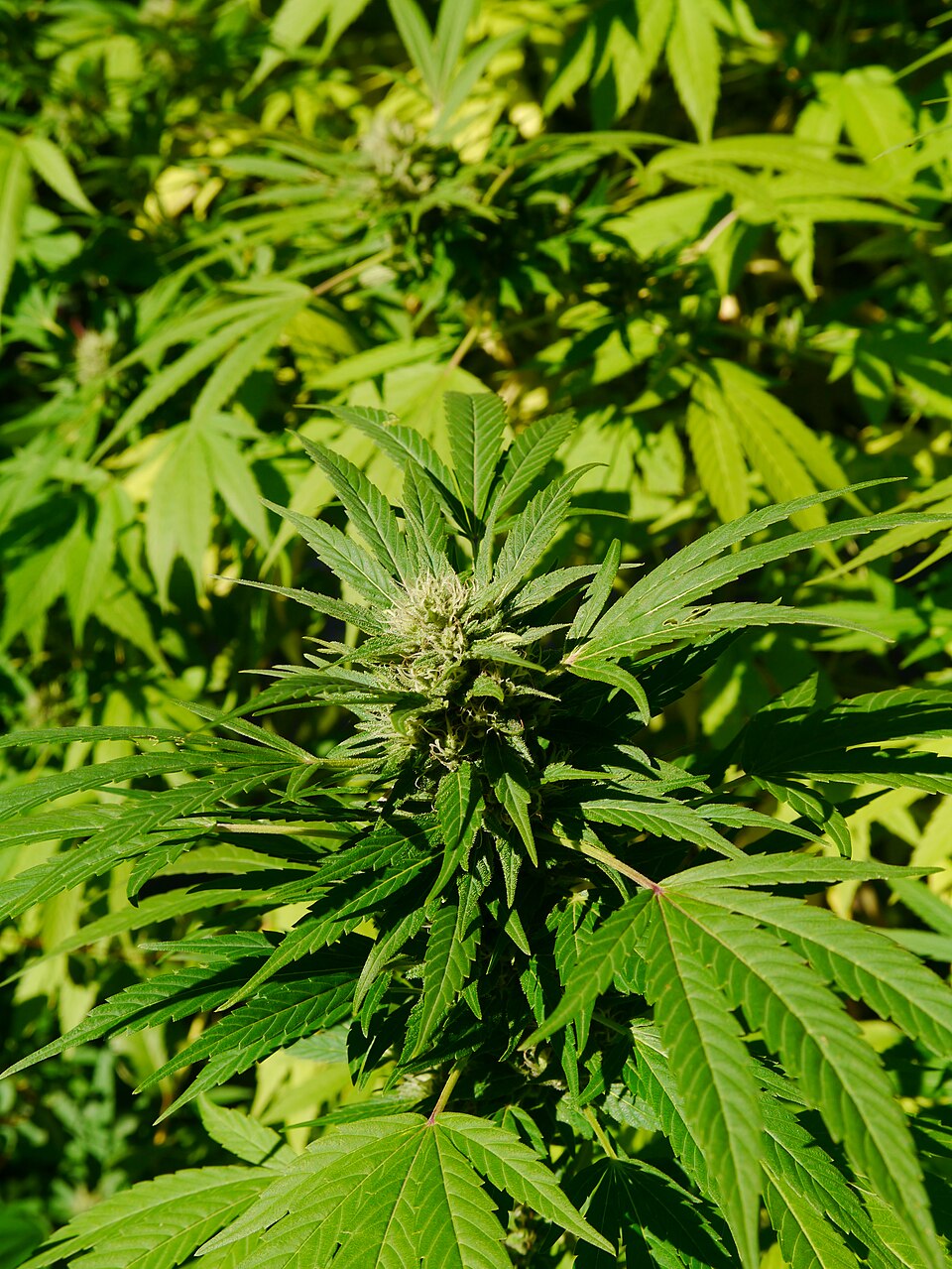
Cannabis sativa
Industrial hemp
A fast-growing, deep-rooted fibre crop that tolerates metals. It stores them mainly in roots; its interest lies in producing non-food fibre on contaminated land. In Italy it has been grown for this purpose around the Taranto steelworks.
How it works
- Mechanisms
- phytoextractionphytostabilisation
Contaminants
| Contaminant | Evidence | What was shown |
|---|---|---|
| Cadmium | field | Field trial on metal-contaminated soil: extraction potential of 126 g Cd per hectare per growing season, with a check on fibre quality (Linger et al. 2002). In a two-year trial under Mediterranean climate hemp lowered extractable soil Cd by 32%, with no change in total content (Guidi Nissim et al. 2018). In semi-natural conditions Cd, Ni and Cr accumulate mainly in roots (Citterio et al. 2003).
|
| Lead | field | In the Mediterranean trial hemp gave the best lead extraction rate of the four species compared (36 g/ha/year) and lowered extractable Pb by 46% (Guidi Nissim et al. 2018). On a Belgian site contaminated with Cd, Pb and Zn stem yield fell 30–50% against the control (De Vos et al. 2023). |
Limits
The amounts extracted are small (tens to a few hundred grams per hectare per year) and total soil content does not change within a few years. At Taranto the C.A.N.A.P.A. project grew hemp on farmland near the ILVA plant; the available report is a conference paper and its authors state that longer trials are needed for definitive data on metals, dioxins and PCBs (Colao et al. 2015). For dioxins and PCBs the sources consulted contain no removal measurements. Fibre must be tested before use.
Where it has been tried
Former Loring Air Force Base (Mi'kmaq Nation land)
PhytoremediationField scale, 2022
Cannabis sativa
The Mi'kmaq Nation, the Upland Grassroots group and researchers from several institutions (Nason, White and colleagues) grew hemp in the field and analysed PFAS in paired plant and soil samples; the harvested hemp was treated by hydrothermal liquefaction to destroy the PFAS.
Outcome Hemp took up 10 of the 28 PFAS, carboxylic acids and short-chain compounds best. In all it removed about 1.4 mg of PFAS, at most some 2% of what the soil held in the best area. The authors write that hemp is not at present a comprehensive solution for PFAS-contaminated soil. Liquefaction degraded nearly 100% of the carboxylic acids; part of the sulfonic acids remained.
Taranto
PhytoremediationField scale, 2014–
Cannabis sativa
Vincenzo Fornaro, with the CanaPuglia association, sowed hemp in April 2014 on the land where the sheep used to graze, to convert the farm (fibre, products) and with the stated aim of cleaning the soil. A second phase, funded by the regional «Principi Attivi» call, was to sample the plants.
Outcome No measured result was found: the sources consulted are press articles and report no soil or plant analyses. The remediation effect of hemp at Taranto therefore remains undocumented.
Sources
- Linger et al., Ind. Crops Prod. 16:33, 2002
- Citterio et al., Plant Soil 256:243 (record in the University of Milano-Bicocca repository), boa.unimib.it, 2003
- Guidi Nissim et al., Environ. Sci. Pollut. Res. 25:9114, 2018
- De Vos et al., Environ. Sci. Pollut. Res. 30:41665, 2023
- Colao et al., C.A.N.A.P.A. Coltiviamo Azioni per Nutrire, Abitare, Pulire l'Aria (SCITEPRESS conference paper), scitepress.org, 2015
Draft compiled from public sources, not yet reviewed.
Other species for the same contaminants
Species that the literature reports acting on at least one of this one's contaminants, the closest first.