Fungus, mould
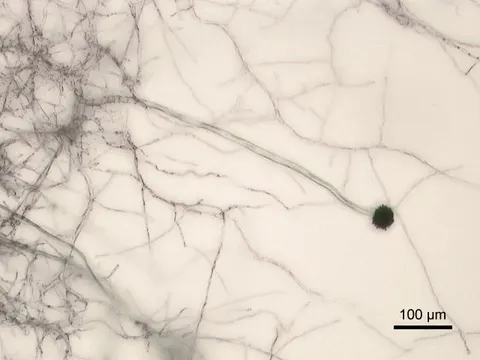
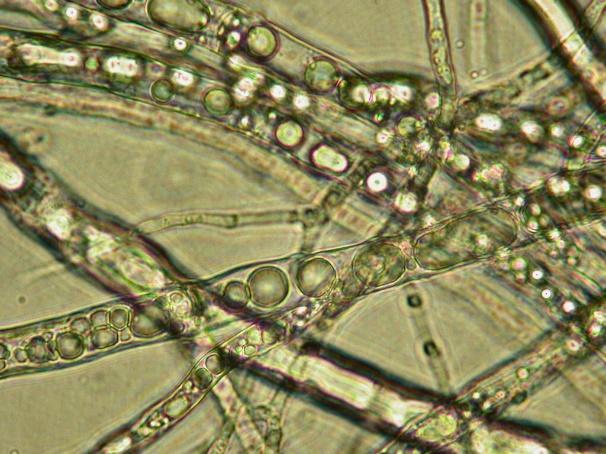
Mucor circinelloides
A fast-growing mucoralean fungus isolated from mine tailings. Its cell wall binds large amounts of lead, and when inoculated into soil together with the plant Solanum nigrum it increases plant growth and lead removal.
How it works
- Mechanisms
- biosorption
Contaminants
| Contaminant | Evidence | What was shown |
|---|---|---|
| Lead | laboratory | Strain isolated from mine tailings at Anshan (China). In Pb-contaminated soil (trial scale not stated in the abstract) removal was 58.6% with fungus and Solanum nigrum together, 47.2% with the fungus alone and 40.2% with the plant alone. In solution the maximum adsorption capacity (Langmuir, pH 6.0, 25 °C) is 500 mg Pb per g biomass.
|
| Cadmium | laboratory | Maximum adsorption capacity 15.4 mg Cd per g biomass (pH 6.0, 25 °C); the metal binds mainly to the cell wall. |
| Arsenic | laboratory | Maximum adsorption capacity 29.4 mg As per g biomass (pH 6.0, 25 °C). |
Limits
In the plant-fungus aqueous system the fungus immobilises metals and reduces their transfer to the plant (Li et al. 2021): this favours stabilisation, not extraction, and sits uneasily with the removal reading of the 2017 paper. It is unclear where the lead removed from soil ends up. A related species, Mucor rouxii, immobilised in a column has far lower capacities (4.06 mg/g for Pb; Yan & Viraraghavan 2001). No field trial was found.
Sources
- Sun et al. (2017) Environ Sci Pollut Res 24:9681-9689, 2017
- Li et al. (2021) Ecotoxicol Environ Saf 212:112014, 2021
- Yan & Viraraghavan (2001) Heavy metal removal in a biosorption column by immobilized M. rouxii biomass. Bioresour Technol 78:243-249, 2001
Draft compiled from public sources, not yet reviewed.
Other species for the same contaminants
Species that the literature reports acting on at least one of this one's contaminants, the closest first.