Plant, aquatic plant
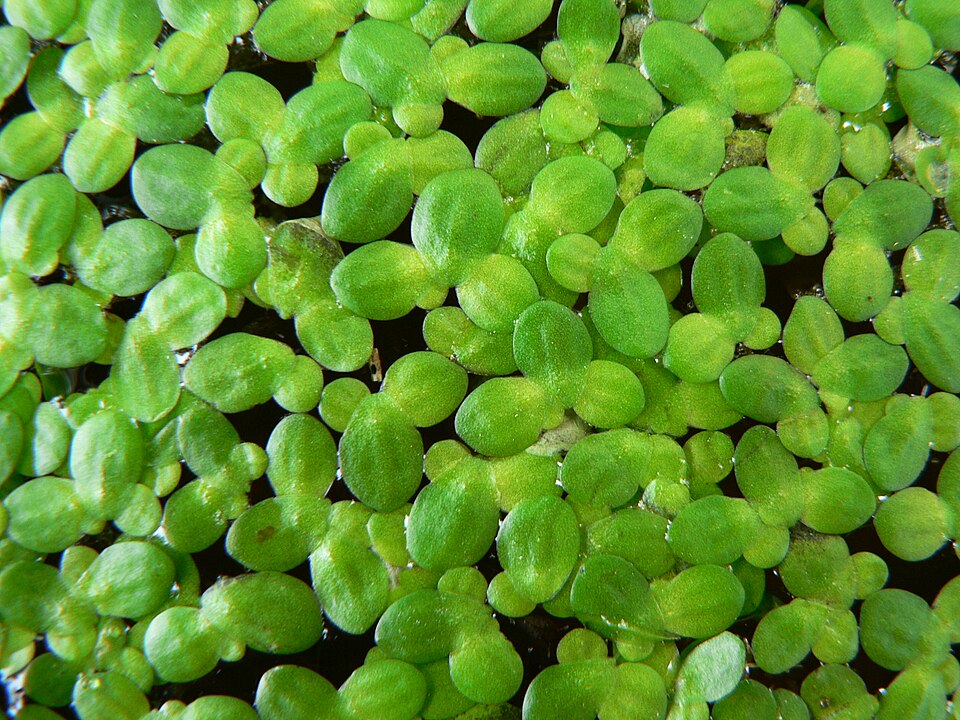
Lemna minor
Common duckweed
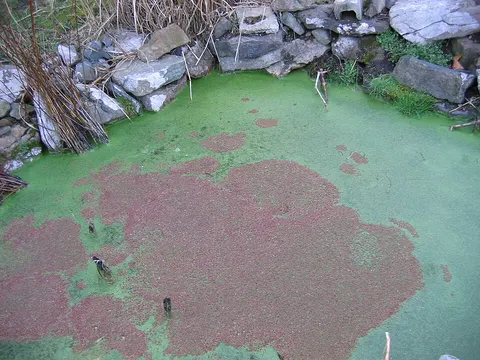
A tiny floating plant that doubles its biomass in a few days and takes up metals directly from water. It is easy to skim from the surface, which suits it to treating effluents in ponds.
How it works
- Mechanisms
- rhizofiltrationphytoextraction
Contaminants
| Contaminant | Evidence | What was shown |
|---|---|---|
| Lead | greenhouse | Two raw effluents (municipal and mixed industrial) in hydroponics for 31 days: removal efficiency above 80% for Cd, Cu, Pb and Ni, with a maximum of 99% for nickel; highest bioconcentration factors of 558 for copper and 523 for lead, which the authors call those of a moderate accumulator (Bokhari et al. 2016). The reference study tested its accumulation of Cd, Cr, Cu, Ni, Pb and Se supplied singly at 0.1–10 mg/L (Zayed et al. 1998). |
| Arsenic | laboratory | In hydroponics, 22 days: removal of more than 70% of arsenic at an initial concentration of 0.5 mg/L, reached on day 15; the percentage falls as the initial concentration rises (Goswami et al. 2014). |
| Copper | laboratory | Copper at 78 µM cuts biomass production by 60% and chlorophyll by 45% (Rofkar et al. 2014): accumulation has a toxicity ceiling. |
Limits
It treats water at low concentrations, on the order of mg/L or less; at higher concentrations growth falls and removal with it. The trials cited are tank or laboratory tests, not operating plants. If the biomass is not harvested it dies and returns the metal to the water. Growth stops in winter.
Sources
- Bokhari et al., Int. J. Phytoremediation 18:25, 2016
- Zayed et al., J. Environ. Qual. 27:715, 1998
- Goswami et al., Int. J. Phytoremediation 16:1221, 2014
- Rofkar et al., Int. J. Phytoremediation 16:155, 2014
Draft compiled from public sources, not yet reviewed.
Other species for the same contaminants
Species that the literature reports acting on at least one of this one's contaminants, the closest first.