Plant, fern
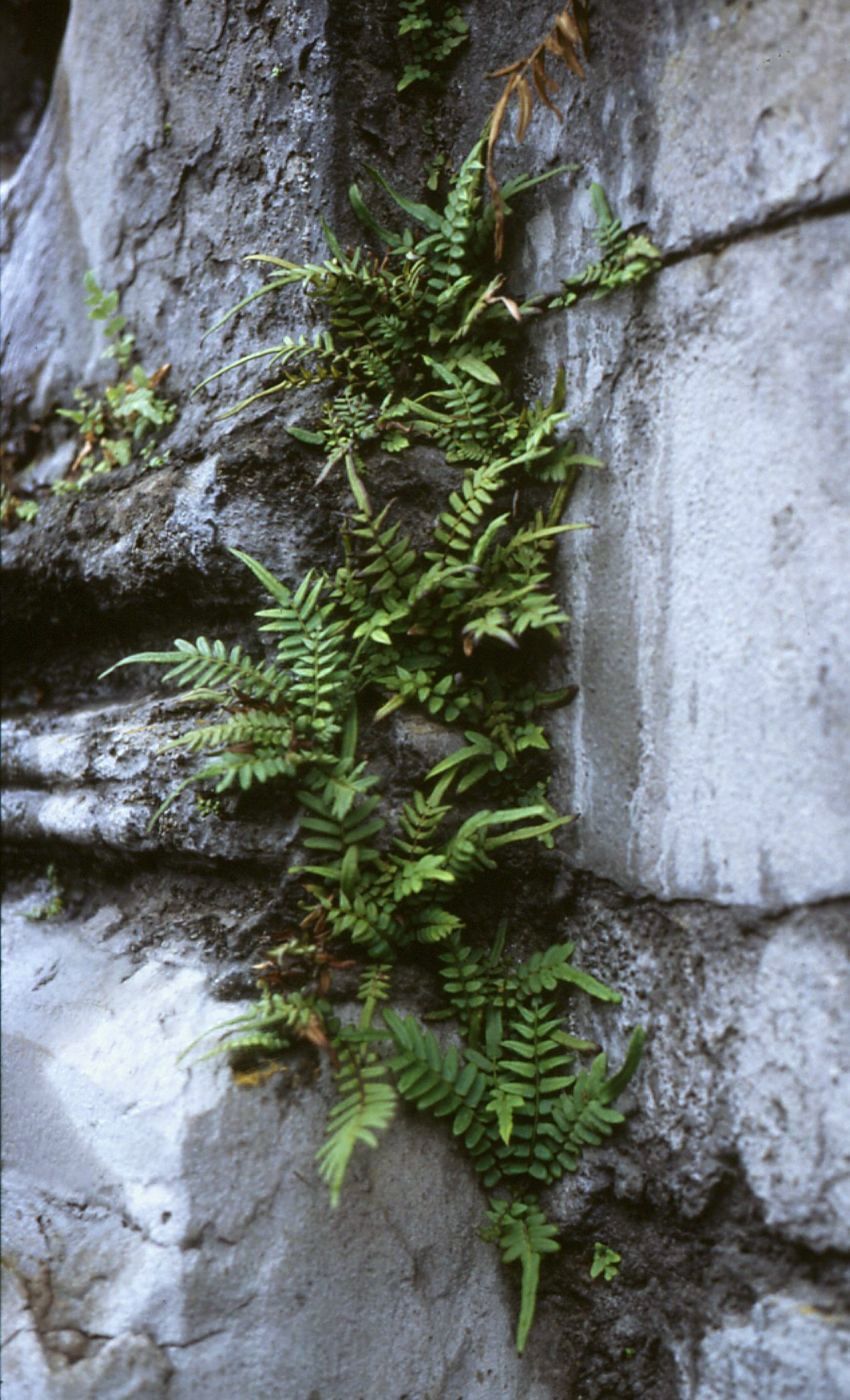
Pteris vittata
Chinese brake fern
A fern that hyperaccumulates arsenic in its fronds: the first plant in which this was described (2001) and still the reference species for arsenic phytoextraction from soil. In Italy it has been tested in the field on industrial soils and on soils with naturally occurring arsenic.
How it works
- Mechanisms
- hyperaccumulationphytoextraction
Contaminants
| Contaminant | Evidence | What was shown |
|---|---|---|
| Arsenic | field | Field trials in Italy: on two natural soils with 750 and 58.4 mg/kg As, the authors report soil As reduced by 70.4% and 26.4% after two phytoextraction cycles; in the field, frond accumulation peaks at 100–120 days (Antenozio et al. 2024). At a heavily contaminated metallurgical site, a three-year in situ trial with ferns inoculated with arbuscular mycorrhizal fungi improved As removal in the 0–0.2 m layer (Cantamessa et al. 2020).
|
| Arsenic | greenhouse | Discovery of hyperaccumulation: in a greenhouse, on arsenic-spiked soil, fronds reached 22,630 mg/kg As (dry weight) (Ma et al. 2001). |
Limits
It extracts arsenic only, and only from the layer its roots explore (a few tens of centimetres). The removal rate depends on available As, organic matter and rainfall, and varies widely between field trials (Zeng et al. 2022). It is a warm-climate fern: frost limits outdoor use. Harvested fronds hold arsenic in soluble form and must be handled as contaminated waste.
Where it has been tried
Dengjiatang, Chenzhou (arsenic)
PhytoremediationField scale, 2002–2008
Pteris vittata
Field phytoextraction led by Chen Tongbin (Chinese Academy of Sciences). After ploughing the contaminated soil, in April 2002 the fern Pteris vittata was planted at 40 × 40 cm spacing; the fronds, which accumulate the arsenic, were mown and removed once a year. Treatment went on without a break for six years.
Outcome The Chen group's original data on the fall in soil arsenic were not read for this record (the Springer chapters could not be opened) and remain to be added. The study by Li and colleagues (2025) on soils from the site finds, in those remediated with the fern, more available nutrients, greater bacterial diversity and more complex microbial networks than in contaminated soil, that is, a partial recovery of soil functions.
- Li F., Liu J., Tian T., Deng B., Xiao H. The Remediation of Arsenic-Contaminated Soil by Pteris vittata L. Facilitates the Recovery of Soil Bacterial Diversity and Network Complexity. Microorganisms 13(10): 2316, 2025
- Chen T.-B. et al. Phytoremediation of Arsenic-Contaminated Soil in China. In: Phytoremediation, Methods in Biotechnology 23 (pointer, not read: access blocked), 2007
Florida, former CCA wood-treatment site
PhytoremediationField scale, 2000–2002
Pteris vittata
Kertulis-Tartar, Ma, Tu and Chirenje planted the hyperaccumulating fern and measured soil arsenic in 2000, 2001 and 2002, harvesting in 2001 and 2002 either senescing fronds only or all fronds.
Outcome An inconclusive result for the soil: differences between the three years were not statistically significant, because of the extreme variability of soil arsenic, although the surface mean fell from 190 to 140 mg/kg. The ferns removed about 19.3 g of arsenic in all. The authors call for better agronomic practice.
Shimen realgar mine
PhytoremediationField scale
Pteris vittata
Remediation project for farmland in Shimen County with medium to heavy contamination (84.2–296.2 mg/kg of arsenic in soil): phytoextraction with Pteris vittata enhanced with activating agents, and intercropping of the fern with citrus. Reported in the table of real-site cases in the review by Cao and colleagues (2022), which cites Chen Tongbin and colleagues (2016) and Ma Zhiqiang (2020); the original articles were not read.
Outcome More than 1,000 mu (about 67 hectares) of fields treated; average removal of soil arsenic above 10%; produce from the intercropping met national standards (Cao and colleagues 2022). A 10% removal is far from bringing these soils within the limits.
PhytoremediationField scale
Pteris vittata, Miscanthus spp.
Revegetation of the realgar tailings pond (2,883 mg/kg of arsenic): imported soil cover and fertiliser, then planting of Pteris vittata or miscanthus, as combined phytoextraction and phytostabilisation. Case reported by the review of Cao and colleagues (2022); the original study was not read and the review gives the Chinese common name of the miscanthus without the species.
Outcome After five years a stable plant cover had established on the tailings dam, with 39 plant species (Cao and colleagues 2022).
MycoremediationLaboratory, with soil from the site
Pteris vittata, Imperata cylindrica
A survey, not a remediation trial: census of the dominant wild plants in three zones of the mining area (dressing, smelting, tailings) and 18S rDNA analysis of the fungi in their rhizosphere, as groundwork for future combined plant-fungus remediation.
Outcome Pteris vittata and Imperata cylindrica are the dominant wild species; fungi of the phyla Glomeromycota, Ascomycota and Basidiomycota prevail in the soils, in proportions that differ from zone to zone (Zhou and colleagues 2025).
Scarlino, ceneri di arsenopirite (ex Nuova Solmine)
PhytoremediationField scale
Pteris vittata, Populus deltoides 'Dvina', Populus × canadensis 'Orion'
Ciurli, Lenzi, Alpi and Pardossi (University of Pisa) planted the fern Pteris vittata and two poplar clones on the cinders, in pots and on site, following survival, tissue arsenic and stress markers for 24 months. The abstract of that paper does not name the site; Scarlino is given in the same group's later study on the same material. In a greenhouse, Lampis and colleagues then grew the fern for four months on cinders and compost, with and without arsenic-resistant bacteria isolated from the site.
Outcome In the field the authors judge the fern-poplar co-planting suitable, but the abstract gives no amount of arsenic removed and notes that irrigation, tillage and amendments are needed for the plants to establish. In the greenhouse the bacteria raised fern biomass by up to 45% and arsenic removal efficiency from 13% to 35% in four months.
- Ciurli et al., Arsenic uptake and translocation by plants in pot and field experiments, International Journal of Phytoremediation, 2014
- Lampis et al., Promotion of arsenic phytoextraction efficiency in the fern Pteris vittata by the inoculation of As-resistant bacteria: a soil bioremediation perspective, Frontiers in Plant Science, pmc.ncbi.nlm.nih.gov, 2015
Sito metallurgico dismesso dell'Italia nord-occidentale (arsenico)
PhytoremediationField scale, 2014–2017
Pteris vittata, Rhizophagus spp., Funneliformis spp.
The University of Eastern Piedmont (Cantamessa, Massa, Gamalero, Berta) grew the fern Pteris vittata, inoculated or not with arbuscular mycorrhizal fungi, first for two years in a greenhouse on soil from the site and then for three years on the site itself, from March 2014, measuring arsenic at two depths.
Outcome In the greenhouse soil arsenic fell from 170 to 49 mg/kg with mycorrhizal ferns. In the field, by the third year, nearly all sub-areas were below 50 mg/kg in the 0–0.2 m layer (one stayed above the limit); fronds held 835 mg/kg of As on average. Between 0.2 and 0.4 m the decline was slower, which the authors put down to cadmium toxicity.
Wollongbar, disused cattle-dip site
PhytoremediationField scale, 2009–2011
Pityrogramma calomelanos var. austroamericana, Pteris vittata
Niazi, Singh, Van Zwieten and Kachenko planted two hyperaccumulating ferns in January 2009 and harvested them at 10, 22 and 27 months, sampling the soil at three depths at the start and at the end.
Outcome From the arsenic removed in the fronds the authors estimate 55–125 years with Pityrogramma and 143–412 years with Pteris vittata to bring the soil below 20 mg/kg. They also warn that times estimated from soil changes measured on few samples are not reliable.
Sources
- Ma et al., A fern that hyperaccumulates arsenic, Nature 409:579, 2001
- Antenozio et al., Environ. Pollut. 361:124873, 2024
- Cantamessa et al., Plants 9:1211, ncbi.nlm.nih.gov, 2020
- Zeng et al., Influencing factors and prediction of arsenic concentration in Pteris vittata, Environ. Pollut. 292:118240, 2022
Draft compiled from public sources, not yet reviewed.
Other species for the same contaminants
Species that the literature reports acting on at least one of this one's contaminants, the closest first.