Plant, crop
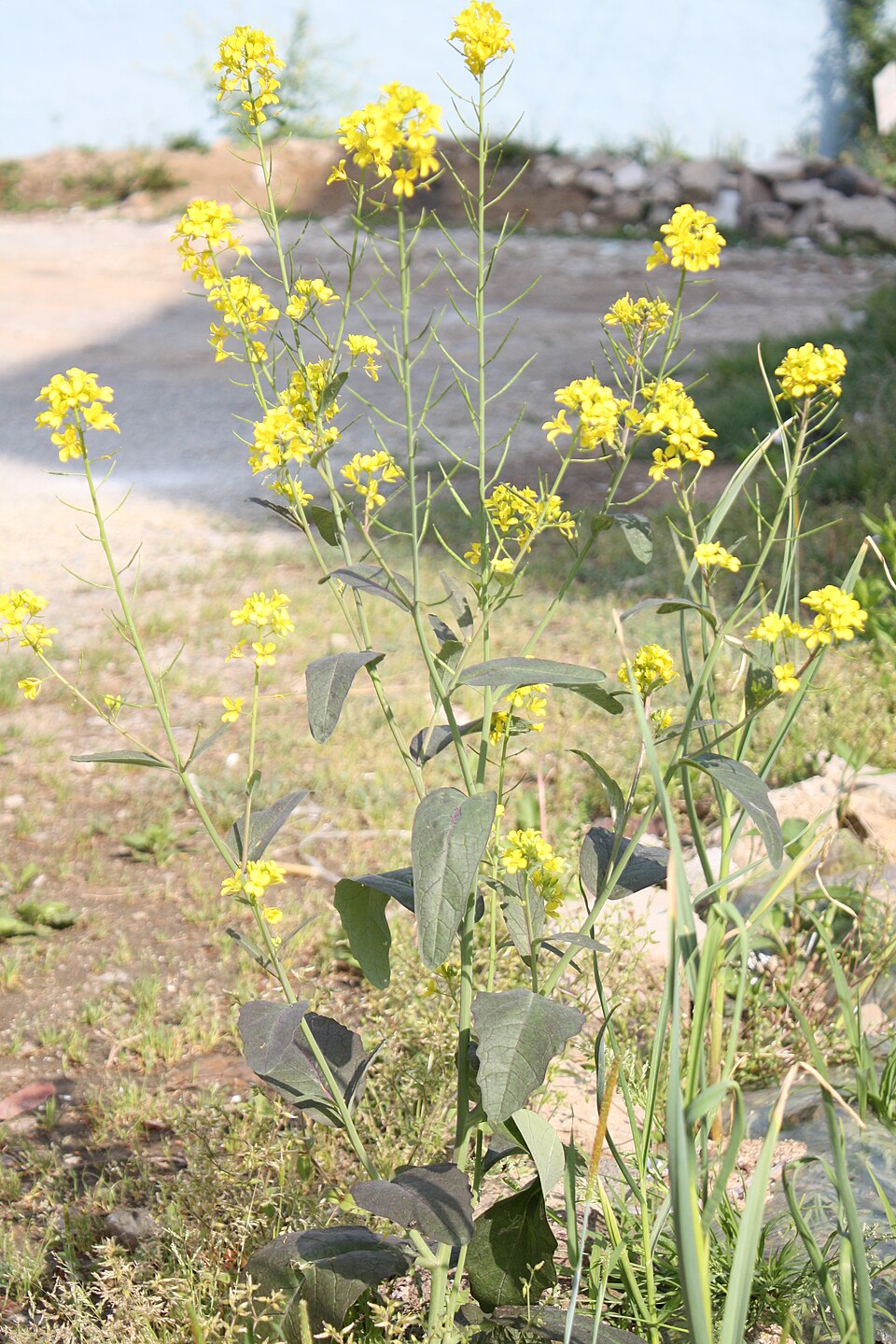
Brassica juncea
Indian mustard
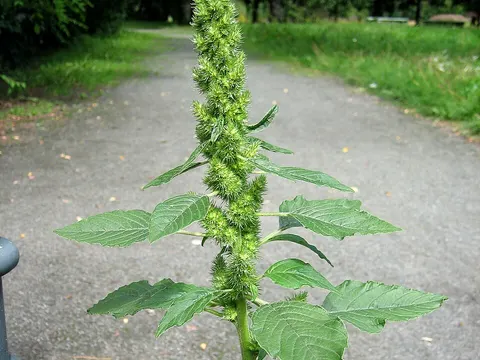
A fast-growing annual crop, the first proposed in the 1990s for metal phytoextraction. It is not a hyperaccumulator: it takes up much lead only when the soil is treated with chelating agents. It has also been field-tested for selenium and radionuclides.
How it works
- Mechanisms
- phytoextractionrhizofiltrationphytovolatilisation
Contaminants
| Contaminant | Evidence | What was shown |
|---|---|---|
| Selenium | field | Field trial on saline sediment contaminated with selenium and boron: three transgenic lines accumulated 2.3 to 4.3 times more Se in leaves than wild type (Bañuelos et al. 2005). |
| Strontium-90 | field | Field test on soil contaminated in the 1950s and 1960s: plant/soil concentration ratio of 8.2 for Sr-90 and 0.46 for Cs-137 (Fuhrmann et al. 2002). |
| Caesium-137 | field | Near Chernobyl, three successive crops in one season lowered Cs-137 activity in the top 15 cm of soil only slightly; the authors conclude that improvements are needed before the technique is feasible (Dushenkov et al. 1999). |
| Lead | greenhouse | On soil with 600 mg/kg Pb amended with synthetic chelates such as EDTA, shoots reached 1.5% Pb; accumulation rises with soil Pb and with the EDTA dose (Blaylock et al. 1997). The paper that introduced the term phytoextraction used this species (Kumar et al. 1995). |
Limits
Lead extraction depends on chelates, which mobilise the metal and can leach it towards groundwater (review by Schmidt 2003): this is why EDTA-assisted phytoextraction is little practised today. Shallow roots, short cycle. Plants rich in metals or radionuclides must be disposed of; transgenic lines cannot be grown everywhere.
Where it has been tried
Aznalcóllar spill and the Guadiamar Green Corridor
PhytoremediationField scale
Brassica juncea, Lupinus albus
CEBAS-CSIC experimental plots: phytoextraction with Indian mustard combined with organic amendments and limestone, and phytoimmobilisation with lupin, a legume that tolerates metals by excluding them at the root and suits acid soils.
Brescia-Caffaro
PhytoremediationGreenhouse, with soil from the site, 2015–2016
Festuca arundinacea, Phalaris arundinacea, Cucurbita pepo subsp. pepo, Medicago sativa, Brassica juncea, Salix caprea, Athyrium filix-femina
The University of Insubria, the University of Milan and ERSAF took about 2,500 kg of soil from the site and grew plants on it in a greenhouse for 18 months (May 2015 – November 2016) in 6 kg pots: ten treatments in triplicate with seven species, intercropping, compost, redox cycles and ammonium thiosulphate, with unplanted controls. It is a semi-field trial, not an open-field one.
Outcome After 18 months total PCBs had fallen by 14–20%. The best treatments (Festuca arundinacea with compost or intercropped with pumpkin; alfalfa with Rhizobium and mycorrhizal fungi) reached about 20%. For dioxins and furans tall fescue alone gave reductions of 11–24% depending on the congener, with half-lives of 2.5–5.8 years. The authors name the short duration, against the persistence of these compounds, as a limit.
- Terzaghi et al., Rhizoremediation of weathered PCBs in a heavily contaminated agricultural soil: results of a biostimulation trial in semi field conditions, Science of the Total Environment, 2019
- Terzaghi et al., New data set of PCDD/F half-lives: natural attenuation and rhizoremediation using several common plant species in a weathered contaminated soil, Environmental Science & Technology, pmc.ncbi.nlm.nih.gov, 2020
Wanshan mercury mining district
PhytoremediationField scale
Brassica juncea
Field trials by the Institute of Geochemistry (Jianxu Wang, Xinbin Feng) with Christopher Anderson (Massey University) on contaminated farmland at Wanshan: Indian mustard (Brassica juncea, several cultivars) grown with thiosulphate added to the soil, which makes mercury soluble and available to the plant. Mercury appears to be taken up as a thiosulphate complex.
Outcome With thiosulphate, mercury concentrations in roots and shoots rose significantly; 66–94% of the mercury in tissues was in a form similar to the sulphide β-HgS. Mercury in the rhizosphere fell compared with untreated soil, but fractions bound to oxides and organic matter shifted to more available forms. The 2013 paper reports phytoextraction yields of 92, 526, 294 and 129 g of mercury per hectare for four cultivars (figures read from the abstract returned by search; the journal page could not be opened).
- Wang J., Feng X., Anderson C.W.N. et al. Implications of mercury speciation in thiosulfate treated plants. Environmental Science & Technology 46, 2012
- Wang J., Feng X., Anderson C.W.N. Thiosulphate assisted phytoextraction of mercury contaminated soils at the Wanshan Mercury Mining District, Southwest China. Journal of Degraded and Mining Lands Management 1(1), jdmlm.ub.ac.id, 2013
- Historic mine waste in rural China (case study), archimedesnz.com
Magic Marker site, Trenton
PhytoremediationField scale, 1996
Brassica juncea
Phytotech (later Edenspace Systems) grew three six-week crops of Indian mustard in 1996 on 4,500 square feet (about 420 m²), applying EDTA (200 mmol/m²) to make the lead available to the plants.
Outcome The area above 400 mg/kg shrank from 179 to 128 m² (from 40% to 28% of the treated surface). Mean lead in the 0–15 cm layer went from 429 to 373 mg/kg, 13% less. The result, often summed up as a successful clean-up, is a modest reduction in one season, obtained by adding a synthetic chelating agent.
Milan-Bovisa (Gasometri area)
PhytoremediationLaboratory, with soil from the site
Brassica juncea, Sinorhizobium sp.
Microcosms with lead-contaminated soil from the Bovisa brownfield, planted with Indian mustard (Brassica juncea) and treated with EDTA to mobilise the metal. A plant growth-promoting bacterium, Sinorhizobium sp. Pb002, was isolated from the rhizosphere of plants grown on that soil and then re-inoculated (10⁸ CFU per gram of soil); the surfactant Triton X-100 was also added to increase the entry of EDTA-Pb complexes into the roots. The paper refers to the Bovisa brownfield without naming the parcel.
Outcome Triton X-100 raised lead in plant tissue but was phytotoxic; the Sinorhizobium inoculum was crucial for plant survival. Together the two treatments raised the efficiency of lead phytoextraction by up to 56%.
Porto Marghera (Venice)
PhytoremediationField scale
Helianthus annuus, Brassica juncea
In-situ phytoextraction of cadmium, mercury and zinc inside the Porto Marghera industrial area, using two high-biomass crops, sunflower and Indian mustard. The paper reports early results of the ongoing trial and the microcosm and mesocosm tests used to choose the treatments.
Outcome Using EDTA and ammonium thiosulphate together during phytoextraction raised the removal efficiency of Cd, Hg and Zn from the soil (the abstract gives no figures).
Chernobyl Exclusion Zone
PhytoremediationField scale
Brassica juncea, Amaranthus spp.
Dushenkov with Mikheev, Prokhnevsky, Ruchko and Sorochinsky tested 20 soil amendments to bring caesium into solution, compared plant species and grew three successive crops of Indian mustard in one season on an experimental plot.
Outcome A modest result: the three crops gave only a small decrease in caesium-137 activity in the top 15 cm of soil. Amaranths accumulated more than the other species and ammonium salts were the most practical amendment. The authors conclude that further improvement is needed before the technique is usable. The famous trials with sunflowers on rafts in a pond and with hemp are cited everywhere, but no primary source with the measurements was found.
Sources
- Blaylock et al., Environ. Sci. Technol. 31:860, 1997
- Kumar et al., Environ. Sci. Technol. 29:1232, 1995
- Bañuelos et al., Environ. Sci. Technol. 39:1771, 2005
- Fuhrmann et al., J. Environ. Qual. 31:904, 2002
- Schmidt, Enhancing phytoextraction: the effect of chemical soil manipulation on mobility, plant accumulation, and leaching of heavy metals, J. Environ. Qual. 32:1939, 2003
Draft compiled from public sources, not yet reviewed.
Other species for the same contaminants
Species that the literature reports acting on at least one of this one's contaminants, the closest first.