Fungus, mycorrhizal
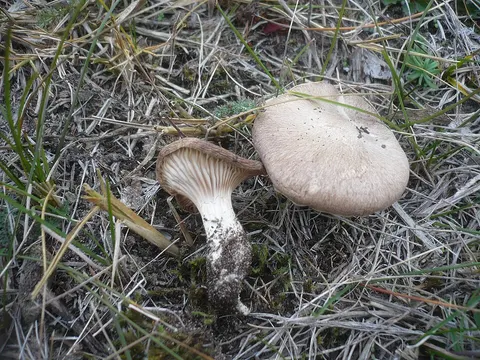
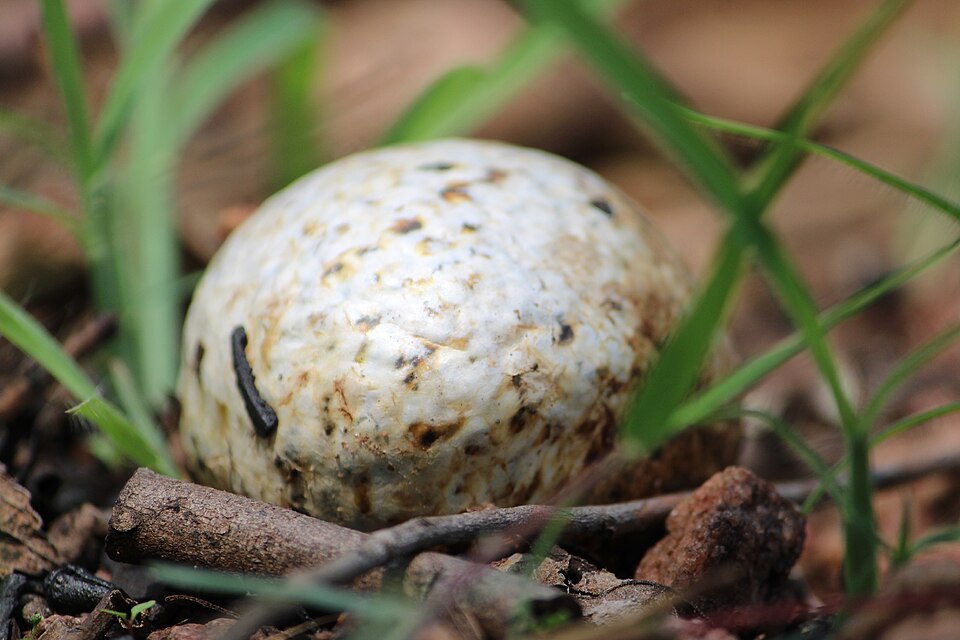
Pisolithus albus
An ectomycorrhizal fungus of the genus Pisolithus, used for decades to establish trees on mine soils. The ecotype from the ultramafic soils of New Caledonia, isolated in nickel mines, protects eucalypts at toxic nickel concentrations by acting as a barrier to metal entry. For the related P. tinctorius there is a seven-year field trial on a coal surface mine.
How it works
- Mechanisms
- mycorrhizal supportphytostabilisation
Contaminants
| Contaminant | Evidence | What was shown |
|---|---|---|
| Nickel | greenhouse | Eucalyptus globulus in pots, dose-response up to 60 mg/kg extractable Ni: plants inoculated with the ultramafic ecotype tolerate the highest dose, uninoculated ones do not. At the top dose root growth is over 20-fold and shoot growth over 30-fold that of controls, with root Ni reduced 2.4-fold and transfer to shoots reduced 60-fold. In vitro the fungus withstands high nickel but accumulates very little. |
Limits
The fungus excludes nickel, it does not remove it: its use is revegetation and stabilisation, and the metal stays in the soil. The result depends on the adapted ecotype and does not hold for any strain. The field trial mentioned concerns P. tinctorius and loblolly pine on a Tennessee coal mine: after 7 years survival and growth were better than controls, but fertilisation reduced survival by favouring competing herbs (Walker et al. 1989); it measures establishment, not a contaminant.
Sources
- Jourand et al. (2010) Tree Physiol 30:1311-1319, 2010
- Walker et al. (1989) Growth, xylem pressure potential, and nutrient absorption of loblolly pine on a reclaimed surface mine as affected by an induced Pisolithus tinctorius infection. Vol. 35:569-581 (AGRICOLA record via Europe PMC; journal name not given in the record), europepmc.org, 1989
Draft compiled from public sources, not yet reviewed.
Other species for the same contaminants
Species that the literature reports acting on at least one of this one's contaminants, the closest first.