Plant, herb
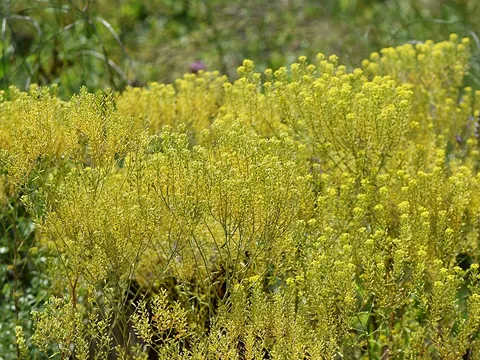
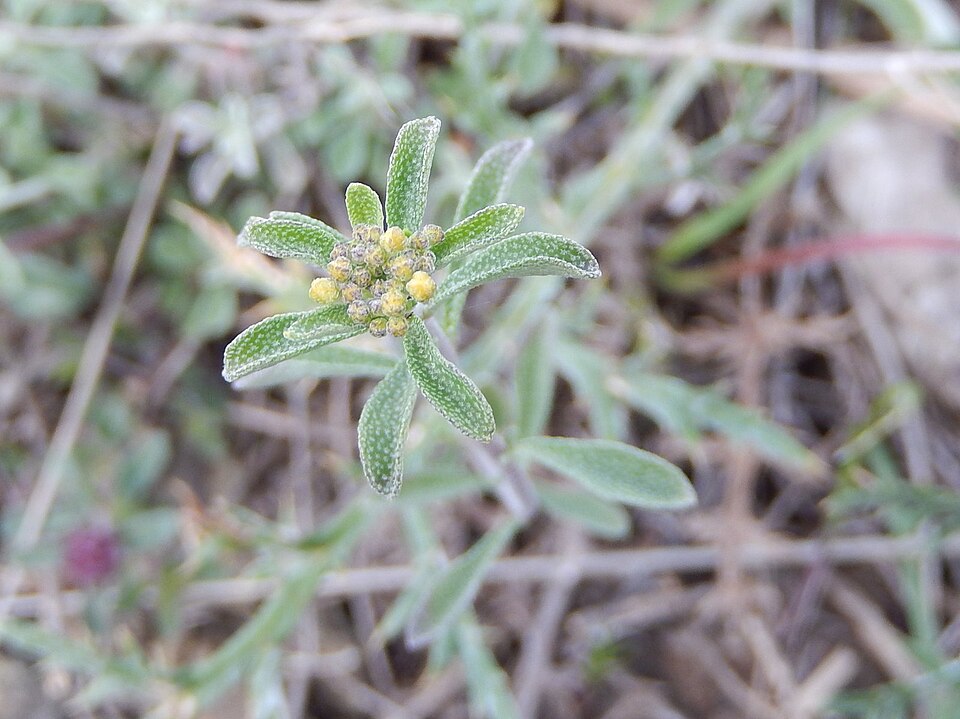
Odontarrhena bertolonii
Bertoloni's alyssum
A small brassica of Italian serpentines (formerly Alyssum bertolonii) that hyperaccumulates nickel. In 1997 it was the subject, in Tuscany, of one of the first field trials of nickel phytomining.
How it works
- Mechanisms
- hyperaccumulationphytoextraction
- Native range
- Ultramafic (serpentine) soils of Italy, including Tuscany
Contaminants
| Contaminant | Evidence | What was shown |
|---|---|---|
| Nickel | field | In situ plots at Murlo (Siena) fertilised for two years: N+P+K fertiliser tripled biomass to 9.0 t/ha without diluting nickel; at 0.8% Ni in dry matter (11% in ash) the authors estimate 72 kg Ni/ha per crop, with no resowing (Robinson et al. 1997). |
Limits
The 72 kg Ni/ha yield is an estimate from experimental plots on natural serpentine, not a figure from extensive cropping. A small plant tied to ultramafic soils. For agromining, Odontarrhena chalcidica is now more used and has multi-year agronomic data.
Sources
Draft compiled from public sources, not yet reviewed.
Other species for the same contaminants
Species that the literature reports acting on at least one of this one's contaminants, the closest first.