Plant, tree
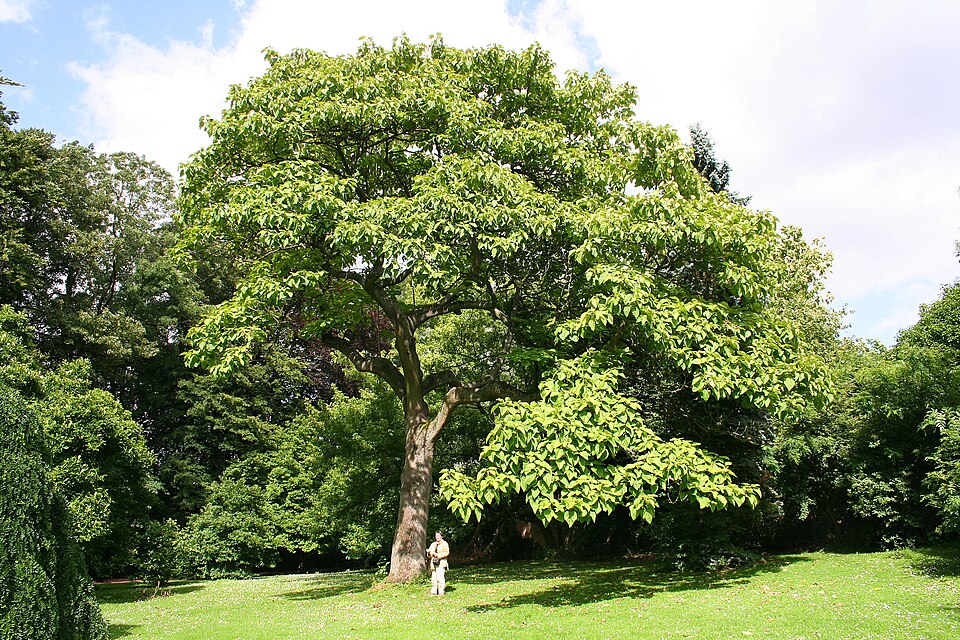
Paulownia tomentosa
Princess tree, empress tree
A very fast-growing tree with large leaves and high transpiration. In Tuscany it was used in a full-scale phytoremediation together with poplar and broom; metals stay mainly in the roots.
How it works
- Mechanisms
- phytostabilisationphytoextraction
Contaminants
| Contaminant | Evidence | What was shown |
|---|---|---|
| Petroleum hydrocarbons | field | Full-scale intervention on 10,000 m² of soil historically contaminated by metals and hydrocarbons, with Populus nigra var. italica, Paulownia tomentosa, Cytisus scoparius and natural vegetation: in three years total hydrocarbons −40% and metals −20–40%, down to values below legal limits, with soil enzyme activities rising (Macci et al. 2013). |
| Lead | greenhouse | Pilot-scale study with EDTA, tartrate and glutamate: root/shoot concentration ratios of 11–39 for Pb, 9–18 for Cd, 7–17 for Cu and 3–5 for Zn; with 10 mM EDTA root Pb rose to 359 mg/kg against 128 in the control, and EDTA gave no greater accumulation than tartrate or glutamate (Doumett et al. 2008). |
Limits
In the full-scale trial three species and natural vegetation grew together: the contribution of paulownia alone cannot be told apart, and there is no comparison with unplanted soil. Metals stop in the roots, so this is stabilisation more than extraction. An alien species in Europe that seeds freely: to be assessed before planting.
Sources
Draft compiled from public sources, not yet reviewed.
Other species for the same contaminants
Species that the literature reports acting on at least one of this one's contaminants, the closest first.