Plant, herb
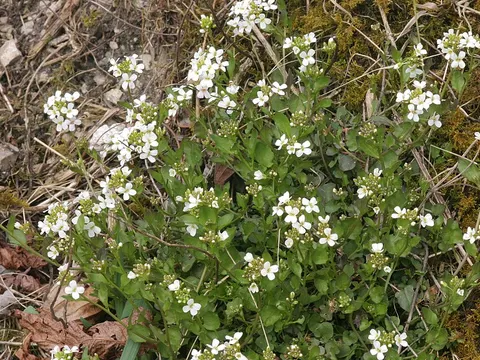
Sedum alfredii
Alfred's stonecrop
A Chinese stonecrop of which a mine ecotype hyperaccumulates zinc and cadmium. It is one of the few known cadmium hyperaccumulators and a model for studying the transporters involved.
How it works
- Mechanisms
- hyperaccumulationphytoextraction
- Native range
- China; the hyperaccumulating ecotype comes from lead-zinc mining areas
Contaminants
| Contaminant | Evidence | What was shown |
|---|---|---|
| Cadmium | laboratory | In nutrient solution the mine ecotype reached about 9,000 mg/kg Cd in leaves and 6,500 mg/kg in stems (dry weight) at 400 µmol/L Cd, with no growth reduction up to 200 µmol/L (Yang et al. 2004). The non-mine ecotype keeps Cd in its roots (Xiong et al. 2004).
|
| Zinc | laboratory | The mine ecotype was identified first as a zinc hyperaccumulator and then as a cadmium one (Yang et al. 2004; review by Liu et al. 2025). |
Limits
The highest figures come from hydroponics and do not carry over to soil, where metal availability is far lower. Only the mine ecotype hyperaccumulates. A small, slow-growing plant; for field use in China, Sedum plumbizincicola is better documented.
Sources
- Yang et al., Plant Soil 259:181, 2004
- Yang et al. 2004, full text (University of Florida IRREC), irrec.ifas.ufl.edu, 2004
- Liu et al., Ecotoxicol. Environ. Saf. 290:117588, 2025
Draft compiled from public sources, not yet reviewed.
Other species for the same contaminants
Species that the literature reports acting on at least one of this one's contaminants, the closest first.