Plant, herb
Sedum plumbizincicola
Sedum plumbizincicola
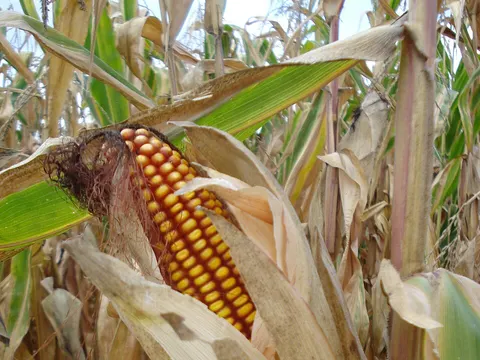
A stonecrop described in 2013 that hyperaccumulates cadmium and zinc. It is the species with the most extensive field evidence for cadmium phytoextraction from farmland, up to hectare scale, including intercropping with maize.
How it works
- Mechanisms
- hyperaccumulationphytoextraction
- Native range
- Lead-zinc mining areas of Zhejiang Province, China
Contaminants
| Contaminant | Evidence | What was shown |
|---|---|---|
| Cadmium | field | An 8-hectare trial in Yunnan on acid farmland (pH 5.61; 2.58 mg/kg Cd): first harvest 1.95 t/ha dry biomass at 170 mg/kg Cd, i.e. 339 g Cd/ha; after two seasons total soil Cd fell from 2.58 to 1.53 mg/kg (Wang et al. 2023). On calcareous soil in Henan, total Cd fell 32.8% after three successive phytoextractions (Zhou et al. 2018).
|
| Zinc | field | In the calcareous-soil trial total Zn fell 19.7% after three cycles (Zhou et al. 2018). In long-term trials intercropping with maize raised extraction efficiency, with maize grain within the national Cd limit (Deng et al. 2016). |
Limits
Suited to farmland with low to moderate cadmium; uptake tracks extractable Cd and drops where organic matter and pH keep it immobilised (Wang et al. 2023). The second harvest yields less than the first. Field trials are almost all Chinese: data from other climates are lacking. Harvested biomass is rich in Cd and Zn and must be disposed of or treated.
Sources
- Wu et al., Sedum plumbizincicola X.H. Guo et S.B. Zhou ex L.H. Wu (Crassulaceae): a new species from Zhejiang Province, China, Plant Syst. Evol. 299:487, 2013
- Wang et al., Sci. Total Environ. 905:167216, 2023
- Zhou et al., Int. J. Phytoremediation 20:1243, 2018
- Deng et al., Int. J. Phytoremediation 18:134, 2016
Draft compiled from public sources, not yet reviewed.
Other species for the same contaminants
Species that the literature reports acting on at least one of this one's contaminants, the closest first.