Plant, aquatic plant
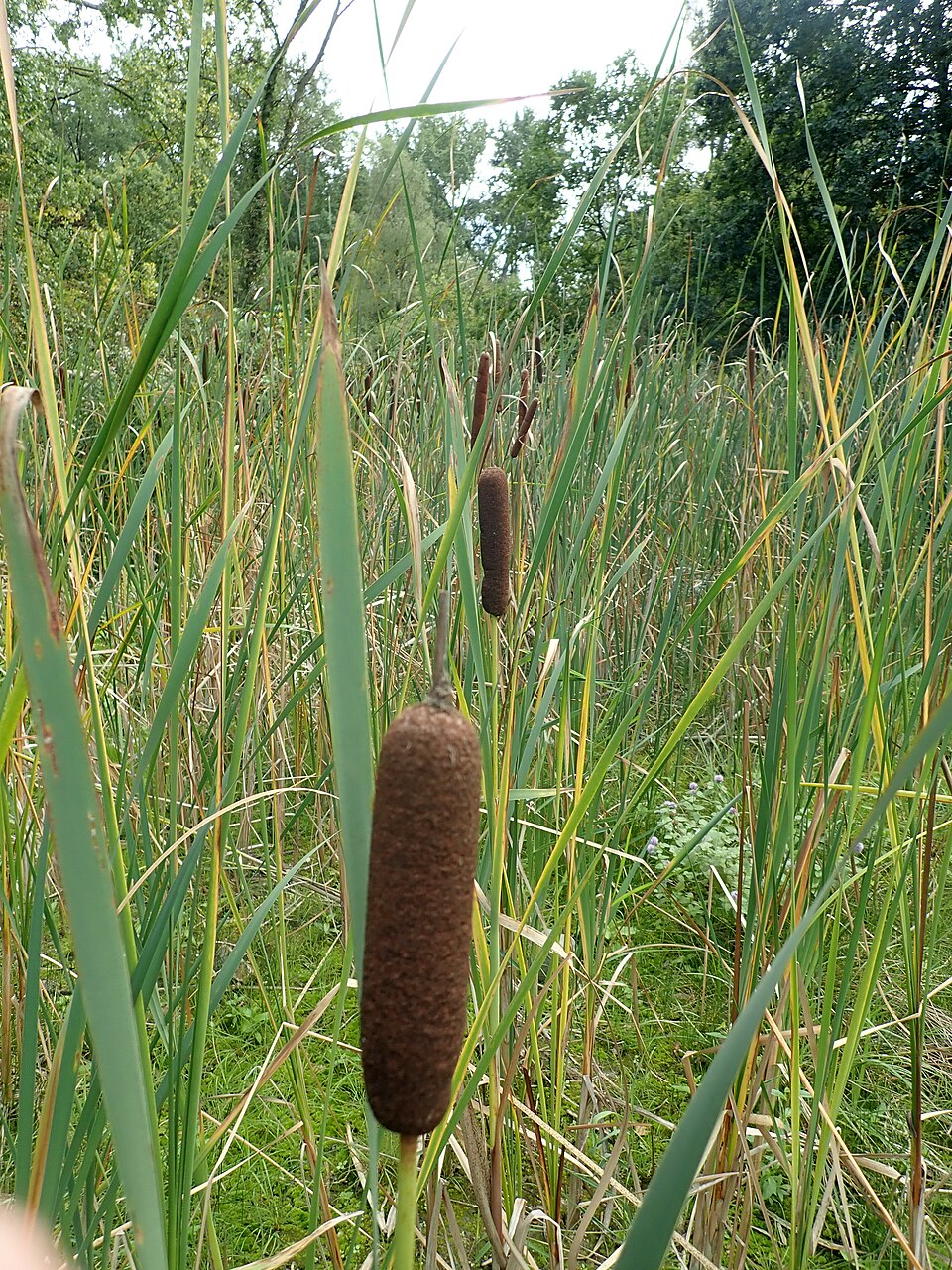
Typha latifolia
Broadleaf cattail
A robust marsh plant, tolerant of metals without need for selected populations. It is the typical species of constructed wetlands treating mine drainage and ash leachate: metal settles in the sediments, the plant keeps the system working.
How it works
- Mechanisms
- rhizofiltrationphytostabilisation
Contaminants
| Contaminant | Evidence | What was shown |
|---|---|---|
| Manganese | field | A constructed wetland at Springdale (Pennsylvania) for coal-ash leachate, four cattail cells: iron and manganese lowered by 91% on average in the first year and by 94 and 98% in the second; cobalt and nickel by 39 and 47% in the first year and 98 and 63% in the second. Sediments are the main sink; cattail above-ground tissue took up each year only 0.91% of the Fe, 4.18% of the Mn, 0.19% of the Co and 0.38% of the Ni (Ye et al. 2001). |
| Lead | field | Natural populations on contaminated and clean sites: leaf metals stay low (Zn 22–122, Pb 4.7–40, Cd 0.2–0.8 µg/g) even with sediments up to 3,009 µg/g Zn and 18,894 µg/g Pb; in roots Pb up to 3,628 µg/g. Populations from clean and contaminated sites respond alike: tolerance belongs to the species (Ye et al. 1997). |
Limits
The plant retains a minimal share of the metal: harvesting it does not clean the system. Sediments load up with metals and must eventually be removed and disposed of. Efficiency varies from year to year and metal to metal (nickel at 47–63%). It needs a controlled water flow and space.
Sources
Draft compiled from public sources, not yet reviewed.
Other species for the same contaminants
Species that the literature reports acting on at least one of this one's contaminants, the closest first.