Plant, grass
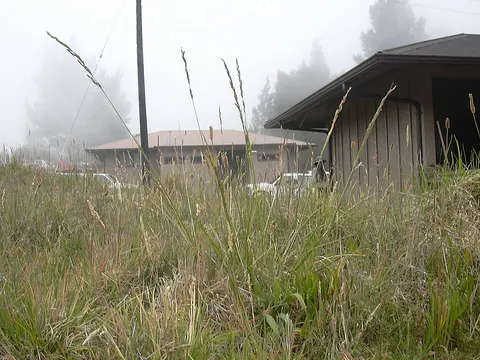
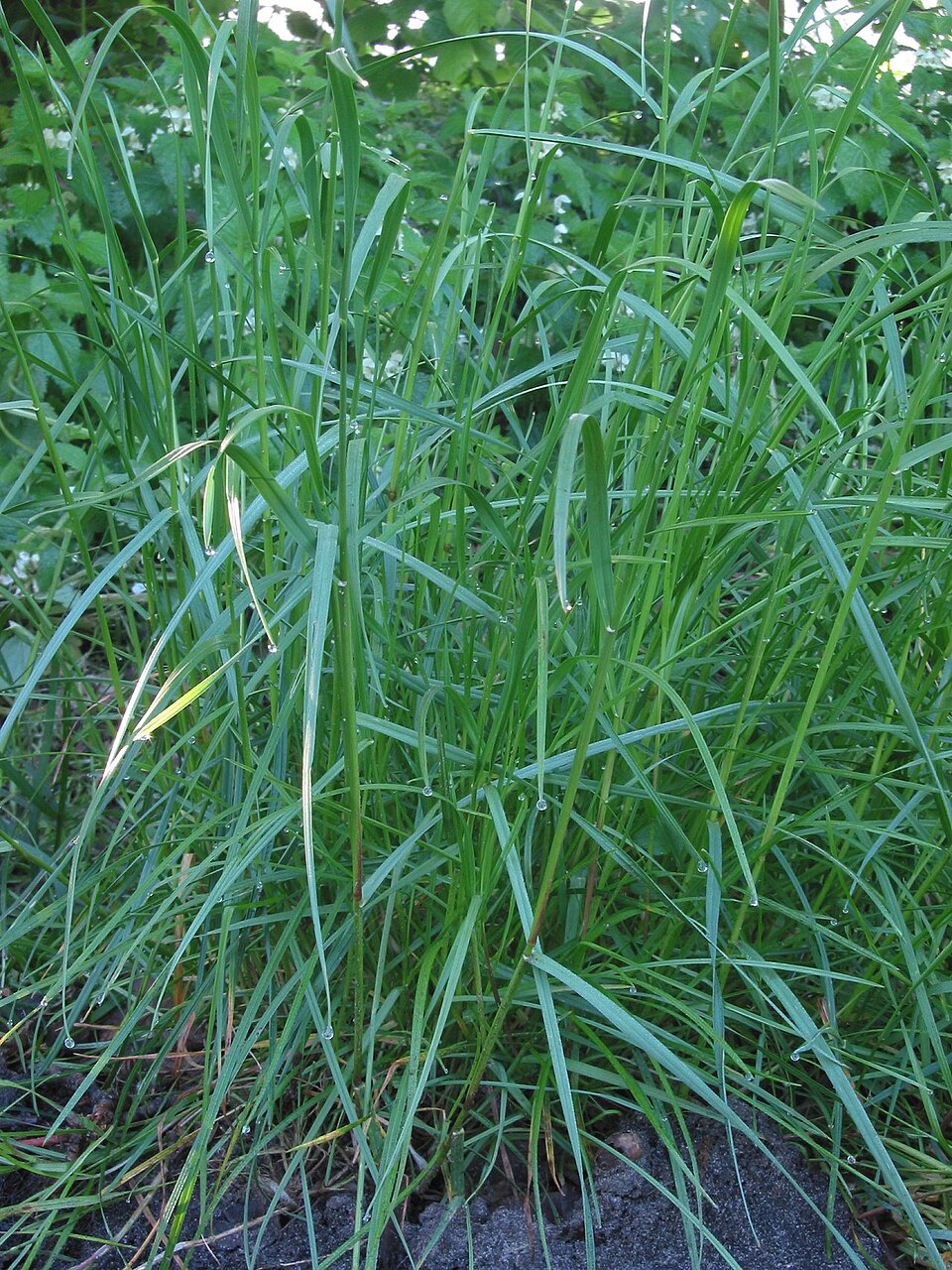
Lolium perenne
Perennial ryegrass
A turf grass with a dense fibrous root system, among the most used in studies of rhizodegradation of hydrocarbons and PAHs. Results are less clear-cut than often claimed: in long-contaminated soils the advantage over bare soil can be absent.
How it works
- Mechanisms
- rhizodegradation
Contaminants
| Contaminant | Evidence | What was shown |
|---|---|---|
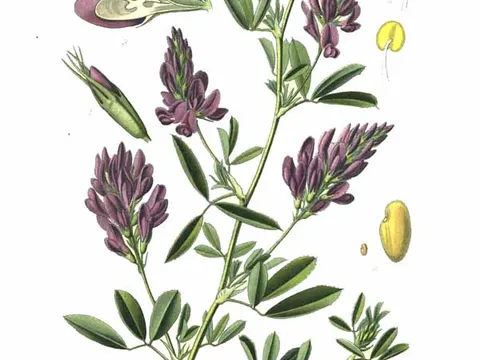
| Petroleum hydrocarbons | field | At ten refinery sites (13.7 g/kg hydrocarbons on average), ryegrass and alfalfa with nitrogen fertiliser and tillage: 72–90% decontamination in a year, against five years with natural vegetation alone (Panchenko et al. 2023). |
| Polycyclic aromatic hydrocarbons | greenhouse | Soil contaminated with PAHs since World War II, in pots for 12 and 18 months: after one year the 15 PAHs monitored fell to 50%, with fluoranthene and pyrene best degraded and benzo[a]pyrene also declining; mostly, however, with no significant difference between pots with ryegrass and pots with soil microflora alone (Rezek et al. 2008). Dissipation of 3–6-ring PAHs in the rhizosphere is the subject of Binet et al. (2000). |
Limits
Roots in the top 20–30 cm: it does not reach deep contamination. For aged PAHs the limiting factor is bioavailability, which the plant does not always improve (Rezek et al. 2008); dibenz[a,h]anthracene and indeno[1,2,3-cd]pyrene did not decline. In the field the plant's effect cannot be separated from that of fertiliser and tillage.
Where it has been tried
Monchegorsk nickel-copper smelter and industrial barren
PhytoremediationGreenhouse, with soil from the site
Lolium perenne
Perennial ryegrass grown on soils contaminated by the Kola Peninsula nickel-copper smelter, with and without natural iron-manganese nodules from the Gulf of Finland as an immobilising agent; plants and microorganisms were compared as indicators of success. The scale (pot or plot) is not stated in the abstract.
Outcome The nodules lowered soluble metals and shoot metal content and clearly improved growth. Among microbial indicators, community-level physiological profiling, biomass carbon and basal respiration responded; bacterial and fungal counts and enzyme activity proved unreliable.
Quintero-Puchuncaví (Ventanas industrial complex)
PhytoremediationLaboratory, with soil from the site
Lolium perenne
Aided phytostabilisation on acidic soils from the Puchuncaví valley: laboratory test of locally available amendments (seashell grit, biosolids, natural zeolite and iron-activated zeolite), with perennial ryegrass as the indicator of phytotoxicity.
Outcome Bringing the soil to pH 6.5 with seashell grit significantly lowers copper and zinc solubilisation without raising that of arsenic, and removes phytotoxicity and excessive accumulation in shoots. Above pH 6.5, with biosolids or zeolite, arsenic in pore water rises.
Sources
- Rezek et al., Chemosphere 70:1603, 2008
- Binet et al., Soil Biol. Biochem. 32:2011, 2000
- Panchenko et al., Life 13:177, 2023
Draft compiled from public sources, not yet reviewed.
Other species for the same contaminants
Species that the literature reports acting on at least one of this one's contaminants, the closest first.