Fungus, mycorrhizal
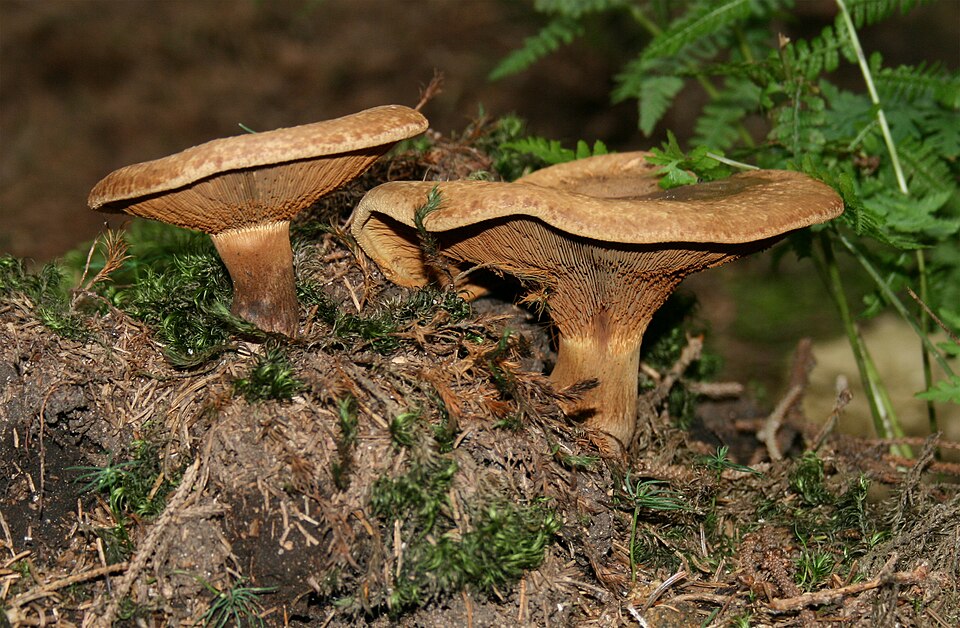
Paxillus involutus
Brown roll-rim
An ectomycorrhizal fungus with a broad host range and a model for cadmium studies in mycorrhizal fungi. Associated with poplar on heavily polluted soil it nearly doubles leaf cadmium: unlike Suillus and Pisolithus, here mycorrhiza increases extraction rather than reducing it.
How it works
- Mechanisms
- mycorrhizal supportphytoextraction
Contaminants
| Contaminant | Evidence | What was shown |
|---|---|---|
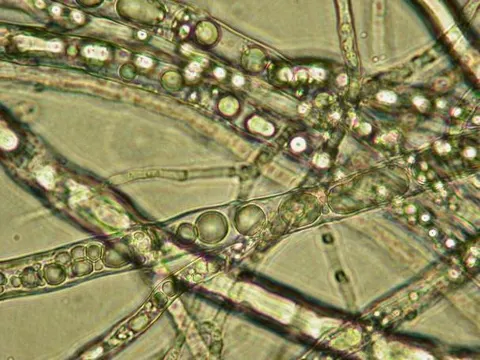
| Cadmium | greenhouse | Pot experiment with soil from a contaminated site, willow (Salix viminalis) and poplar (Populus canadensis) with three ectomycorrhizal fungi, four replicates: in poplar with P. involutus leaf Cd rose to 2.74 ± 0.34 mg/kg dry matter, nearly 100% above the control, with greater root-to-leaf translocation and greater total extraction. In the mycelium, at 0.05 µM Cd, the metal is distributed between cell wall (50%), cytoplasm (30%) and vacuole (20%).
|
Limits
2.74 mg/kg in leaves is still a low concentration: even doubled, extraction would take a great many harvest cycles. The effect holds for the poplar-P. involutus combination, not in general. The species shows no adaptive zinc tolerance in populations near smelters (Colpaert et al. 2004). The mushroom is poisonous if eaten.
Sources
- Sell et al. (2005) Plant Soil, 2005
- Blaudez, Botton & Chalot (2000) Microbiology 146:1109-1117, 2000
- Colpaert et al. (2004) New Phytol 162:549-559, 2004
Draft compiled from public sources, not yet reviewed.
Other species for the same contaminants
Species that the literature reports acting on at least one of this one's contaminants, the closest first.