Fungus, mould
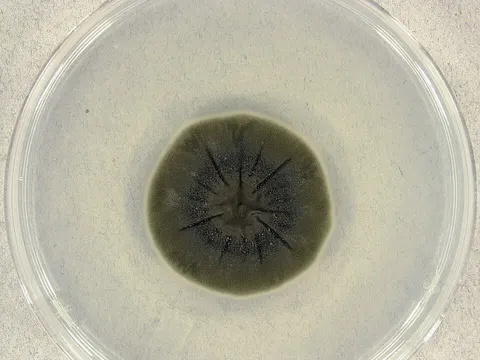
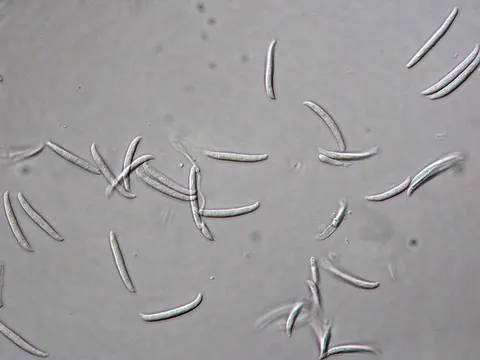
Penicillium janthinellum
A soil mould repeatedly isolated from creosote-contaminated sites and former gasworks. It is not ligninolytic; it degrades heavy PAHs only partially and with other nutrients present, but in coculture with bacteria it enables degradation that neither achieves alone. Other Penicillium species isolated from the same sites use pyrene as sole carbon source.
How it works
- Mechanisms
- mycodegradation
Contaminants
| Contaminant | Evidence | What was shown |
|---|---|---|
| Polycyclic aromatic hydrocarbons | laboratory | Strain VUO 10201, isolated from contaminated soil, cannot use high-molecular-weight PAHs as sole carbon source but partially degrades them in nutrient broth; in coculture with bacteria (Stenotrophomonas maltophilia or a consortium) there is significant degradation of, and growth on, pyrene, chrysene, benz[a]anthracene, benzo[a]pyrene and dibenz[a,h]anthracene. Isolates from a former gasworks: P. janthinellum removed 57% of 50 mg/L pyrene in 28 days at 22 °C, P. terrestre 75%.
|
Limits
Liquid-culture data. Alone the fungus neither grows on heavy PAHs nor mineralises them significantly: the result depends on the bacterial partner. At 100 mg/L pyrene, removal by P. janthinellum falls to 31.5%. No field trial was found.
Sources
- Boonchan, Britz & Stanley (2000) Appl Environ Microbiol 66:1007-1019, 2000
- Saraswathy & Hallberg (2002) FEMS Microbiol Lett 210:227-232, 2002
Draft compiled from public sources, not yet reviewed.
Other species for the same contaminants
Species that the literature reports acting on at least one of this one's contaminants, the closest first.